







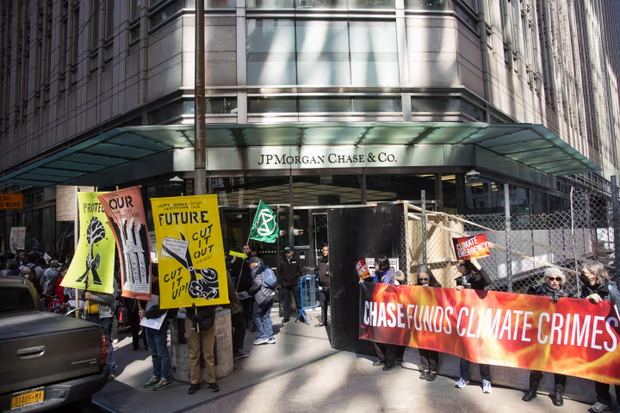


Despite mounting evidence of climate change’s devastating impact and a global push for sustainable practices, the world’s largest banks dramatically increased their financial backing for fossil fuel companies in 2024. A recent report revealed that $869 billion was funneled into coal, oil, and gas ventures—marking a significant surge in fossil fuel investments and raising serious questions about the sincerity of banks’ environmental pledges. While the Paris Climate Agreement urges financial institutions to support green transitions, many banks seem to be reverting to old habits, risking the planet’s future for short-term profit.


I. Surging Fossil Fuel Investments Amid Climate Crisis
1. Sharp Reversal of Previous Trends
The report, assembled by eight environmental advocacy groups, highlights a concerning shift: while fossil fuel financing had been on the decline in 2021, the trend reversed sharply in 2024. Of the 65 largest global banks, two-thirds ramped up their lending to fossil fuel companies, contributing an additional $162 billion compared to the previous year. This sudden increase reflects a troubling disregard for both scientific warnings and public commitments to mitigate global warming.

2. Scientists Urge a Halt to New Fossil Projects
Leading climate scientists have consistently warned that launching new fossil fuel projects would push global temperatures beyond safe limits. The past year was the hottest ever recorded, accompanied by widespread natural disasters driven by rising global temperatures. Despite this, banks continue to finance infrastructure and extraction initiatives that contradict efforts to curb emissions.
II. Major Players in Fossil Fuel Financing
1. US Banks Dominate the Rankings
American financial institutions led the charge in fossil fuel investments. JPMorgan Chase topped the list, providing $53.5 billion, followed closely by Bank of America and Citigroup. Japanese firm Mizuho Financial ranked fourth, while Wells Fargo completed the top five. The most significant year-on-year increases in fossil fuel lending came from these American giants, along with British multinational bank Barclays.

2. Barclays and the UK’s Role
Although US banks dominated fossil fuel lending, UK-based Barclays was one of the few non-American institutions that significantly increased its contributions. While Barclays has publicly stated its commitment to clean energy, its continued support for traditional energy sectors paints a contrasting picture. In a public statement, Barclays emphasized their dual approach: meeting current energy demands while investing in sustainable initiatives, such as allocating £500 million to climate technology start-ups by 2027.
3. Total Lending Since the Paris Agreement
Since the adoption of the Paris Climate Agreement in 2015, which was designed to limit global warming to well below 2°C, global banks have funneled approximately $7.9 trillion into fossil fuel ventures. This staggering amount underscores how financial institutions, despite international agreements, remain deeply entrenched in supporting environmentally harmful industries.
III. The Political Shift and Its Financial Impact
1. Influence of the US Political Climate
The resurgence of Donald Trump’s political influence has coincided with a weakening of climate commitments from financial institutions. Trump’s well-known skepticism of climate science—famously calling it “a giant hoax”—has influenced a broader shift in U.S. policy. Earlier this year, the U.S. Treasury Department withdrew from an international banking initiative aimed at promoting green finance and managing climate-related financial risks.
2. Banks Abandoning Net-Zero Commitments
In January 2024, just before Trump’s inauguration, six major American banks—JPMorgan, Citigroup, Bank of America, Morgan Stanley, Wells Fargo, and Goldman Sachs—officially pulled out of the Net-Zero Banking Alliance. This UN-sponsored coalition seeks to align banks’ lending portfolios with the Paris Agreement by encouraging emission reduction targets and sustainable investment strategies. Their exit represents a significant setback for global climate finance initiatives.
IV. Environmental Advocates Call for Accountability
1. Mounting Criticism from Green Organizations
Environmental groups involved in the report have expressed deep concern about the banking sector’s role in accelerating climate change. David Tong, a campaign manager at Oil Change International and co-author of the report, stressed the urgency of governmental intervention. He argued that regulatory actions are necessary to ensure banks align with global climate goals and stop financing activities that endanger communities worldwide.
2. Reclaim Finance Calls Out Hypocrisy
Lucie Pinson, director of Reclaim Finance and another contributor to the report, criticized banks for “showing their true colors” by stepping away from climate commitments. According to her, while a few European banks made minor progress, most major institutions gave in to the allure of profit from fossil fuel ventures. Pinson emphasized that these actions undermine global climate efforts, especially in a year marked by record-breaking heat.
V. Banks Defend Their Position
1. Citigroup’s Response
In response to the report, Citigroup defended its environmental strategy, stating that the bank supports the transition to a low-carbon economy. A spokesperson reaffirmed the institution’s pledge to reach net-zero financed emissions by 2050 and highlighted the $1 trillion goal in sustainable finance to help clients decarbonize and meet rising energy demands.
2. Barclays’ Rebuttal
Barclays also responded by emphasizing its commitment to clean energy and sustainability. The bank noted that it mobilized nearly $100 billion more in Sustainable and Transition Finance in 2024 than the previous year. Furthermore, its ongoing investment in climate-focused start-ups demonstrates a parallel strategy to balance immediate energy needs with long-term sustainability.
Conclusion
The 2024 surge in fossil fuel financing by major global banks reveals a concerning disconnect between public climate commitments and actual financial practices. As climate disasters become more frequent and severe, the continued support of fossil fuel industries by financial powerhouses undermines efforts to protect the planet. Although some institutions argue they are balancing current energy demands with sustainable investments, the sheer scale of fossil fuel funding suggests otherwise. Unless stricter regulations are enforced and genuine accountability is established, the banking sector will remain a significant obstacle in the global fight against climate change. Governments and citizens alike must demand more transparency and responsibility from the institutions that hold immense power over our environmental future.








