






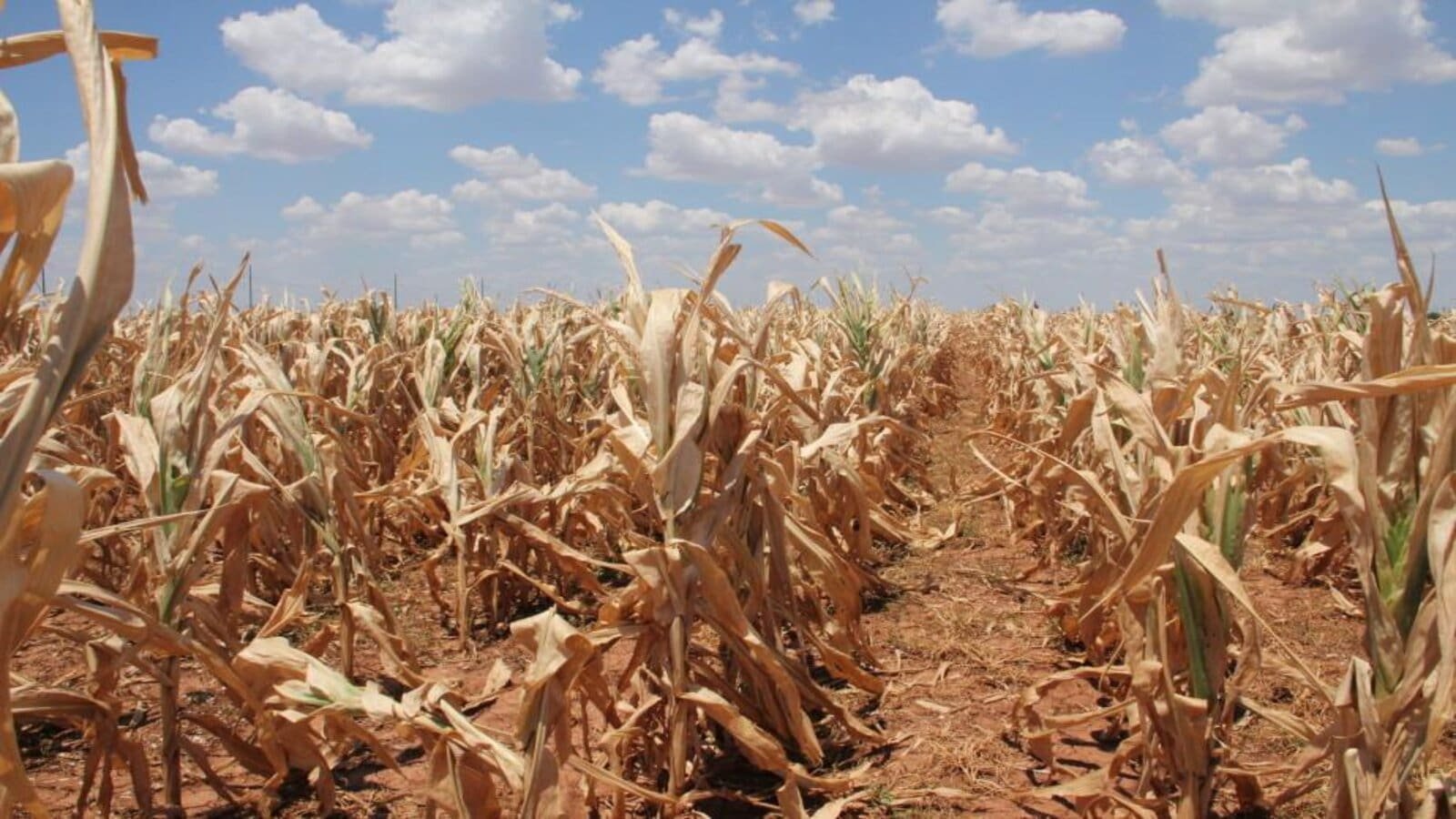


In a dire turn of events, Zambia has officially declared a national food emergency after months of relentless drought and widespread crop failure. President Hakainde Hichilema addressed the nation in a solemn broadcast, stating that over one million hectares of farmland have been decimated and more than 2.3 million people are now at immediate risk of food insecurity. The drought, considered one of the worst in the country’s history, has not only threatened the livelihoods of millions of smallholder farmers but has also placed immense strain on national food reserves, electricity production, and the overall economy.

A Crisis Rooted in Climate Extremes
Zambia, a landlocked country in Southern Africa, is no stranger to climate variability. However, this year’s drought—exacerbated by the El Niño weather phenomenon and intensifying climate change—has led to extreme water scarcity, poor soil moisture, and near-total agricultural failure in many provinces.

The rainy season, which typically begins in November and stretches into April, brought little relief this year. Instead, vast stretches of farmland remained parched, withering crops like maize, sorghum, and groundnuts before they could reach maturity. Maize, Zambia’s staple food crop, has been hit hardest, with nearly 50% of expected national output wiped out, according to the Ministry of Agriculture.
Weather monitoring agencies and regional climate experts have described this year’s rainfall patterns as “highly erratic,” with prolonged dry spells followed by insufficient short rains. Rivers have run dry, reservoirs have receded to critical levels, and boreholes in rural areas have failed to provide consistent access to drinking water.
The Human Toll: Hunger, Displacement, and Desperation
The effects on Zambia’s population are both immediate and alarming. In rural regions like Southern, Western, and Eastern provinces—areas that rely heavily on subsistence farming—the loss of crops has translated into a daily struggle for food. Families are skipping meals, children are being pulled from school to assist in fetching water or foraging for food, and malnutrition rates are beginning to climb.
Communities that had once been self-sufficient are now dependent on food aid, charity, or high-priced imports. According to a joint assessment conducted by the United Nations and Zambia’s Disaster Management and Mitigation Unit (DMMU), nearly a quarter of the population is expected to face acute food insecurity in the coming months without urgent intervention.
One farmer in Choma district described the impact succinctly: “We planted our maize as usual, but the rain never came. Now our granaries are empty, and we have no money to buy food from the market. We are afraid of what is coming.”
Children and pregnant women are especially vulnerable. Clinics in the affected areas are already reporting increases in underweight infants and cases of anemia and stunted growth. Healthcare workers warn that if immediate nutritional support is not deployed, the crisis could evolve into a full-scale famine.
Government Response and National Declaration
On national television, President Hichilema delivered a sobering address declaring the country in a state of food emergency. He appealed for international assistance, while also rolling out a series of emergency measures aimed at cushioning the population.
The declaration allows the government to redirect funds toward emergency food imports, expand its social cash transfer program, and coordinate with NGOs and international partners to deliver aid more efficiently. It also includes price control mechanisms to prevent inflation and hoarding of essential food items.
“We are facing a climate disaster that has no precedent in our recent history,” Hichilema said. “This is not just an agricultural crisis, it is a national survival challenge. We must act quickly, decisively, and together.”
The DMMU has already begun distributing relief maize from the country’s Strategic Food Reserve, though it warns that supplies are limited and will not last more than two months without restocking. Meanwhile, the Zambia Meteorological Department continues to issue warnings that the current drought conditions may persist into the next season.
Regional Ramifications and Energy Crisis
Zambia’s drought is not an isolated event. Across Southern Africa, countries like Zimbabwe, Malawi, and Angola are grappling with similar conditions, raising the specter of a regional food shortage. Regional bodies such as the Southern African Development Community (SADC) have called for coordinated action to mitigate the impact of the drought.
In Zambia, the crisis has further impacted the nation’s hydroelectric output. More than 80% of the country’s electricity is generated from hydropower—much of it sourced from the Kariba Dam. However, receding water levels have drastically reduced power generation capacity, leading to rolling blackouts, energy rationing, and industrial slowdowns.
The impact on Zambia’s economy is multi-dimensional. Reduced agricultural output has driven up food prices, lowered household incomes, and strained the national budget. The energy shortfall has slowed mining operations—a critical source of foreign exchange—and reduced productivity in small and medium-sized enterprises.
Calls for International Aid and Support
International agencies, including the World Food Programme (WFP), Food and Agriculture Organization (FAO), and UNICEF, have responded swiftly to the crisis. The WFP has announced plans to scale up food distribution across the hardest-hit regions and is appealing for $120 million in emergency funding to sustain operations in Zambia through the next six months.
The United Nations Resident Coordinator for Zambia, Beatrice Mutali, emphasized the need for urgent, coordinated action: “What we are witnessing is not just a food emergency—it is a complex humanitarian crisis with implications for health, education, and long-term development. We need to mobilize quickly to prevent widespread suffering.”
Neighboring countries and international donors have also pledged support. The European Union has committed €10 million in food and logistics support, while the United States Agency for International Development (USAID) has deployed assessment teams to identify immediate needs and opportunities for agricultural recovery.
Long-Term Outlook and Climate Resilience
While emergency assistance is crucial, experts caution that Zambia must also invest in long-term climate resilience. The country’s heavy reliance on rain-fed agriculture makes it particularly vulnerable to climate variability. Future strategies will need to include climate-smart farming practices, irrigation development, crop diversification, and better forecasting systems.
Agricultural experts suggest that building silos and grain storage facilities, improving access to drought-resistant seeds, and expanding farmer education programs could significantly reduce the nation’s vulnerability in the years ahead.
“Zambia’s food systems are fragile, and climate shocks like this drought expose deep structural weaknesses,” said Dr. Bernard Tembo, an economist and policy analyst. “Resilience must be built into every layer of the agricultural value chain.”
Moreover, rural infrastructure—including roads, water catchment systems, and extension services—will require sustained investment to ensure communities can withstand future shocks.
Voices of Resilience
Despite the hardship, stories of resilience and innovation have emerged. In Central Province, a cooperative of women farmers is experimenting with drip irrigation powered by solar energy to grow vegetables even during dry spells. In the Copperbelt region, youth-led NGOs are using mobile apps to connect struggling farmers with urban food buyers and suppliers.
Local churches, traditional leaders, and civil society organizations have also stepped up, organizing food banks, distributing seedlings, and providing emotional and spiritual support to affected communities.
While the path ahead is uncertain, Zambia’s history of overcoming adversity gives hope. The resilience of its people, if matched with robust international and domestic support, could transform this crisis into an opportunity for systemic change.
Conclusion
Zambia’s declaration of a food emergency is a wake-up call not only for the country but for the broader region and global community. It underscores the urgent need to address the escalating impact of climate change, particularly on food systems in vulnerable countries. As drought grips the land and crops wither under the sun, the stakes are high—not just for Zambia’s farmers, but for millions of people whose basic survival now depends on swift and sustained action.
If the world responds with urgency, solidarity, and a commitment to long-term solutions, this crisis may yet sow the seeds of a more resilient, food-secure future.