



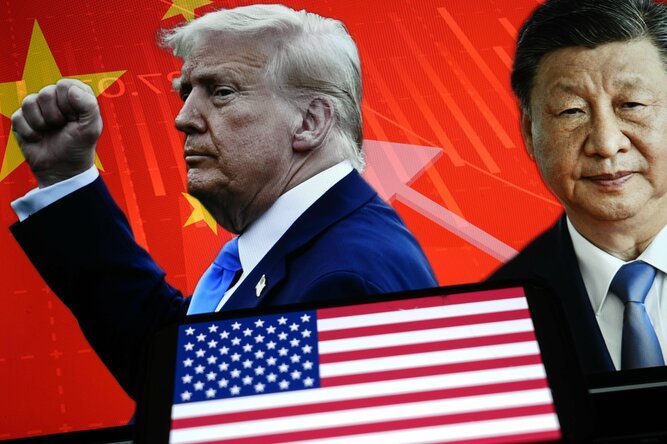

In a significant move that could reshape diplomatic narratives, China is preparing to invite U.S. President Donald Trump to a grand military parade scheduled for September 3 in Beijing’s Tiananmen Square. The event, commemorating the 80th anniversary of the end of World War II, may also include the attendance of Russian President Vladimir Putin—creating a high-profile triad of global powers. Meanwhile, Washington has proposed a visit by Chinese President Xi Jinping to the U.S. around the same time, coinciding with the United Nations General Assembly in New York. If either of these meetings materializes, it would mark the first face-to-face interaction between Trump and Xi since Trump’s return to the presidency earlier this year.


I. Beijing Prepares for Historic WWII Commemoration
1. A Diplomatic Display of Military Power
The planned military parade in Tiananmen Square serves not only as a tribute to China’s wartime victory but also as a projection of national strength. China refers to the conflict as the War of Resistance Against Japanese Aggression, highlighting its historical narrative. Previous parades, such as the one in 2019 commemorating 70 years of Communist rule, have featured cutting-edge military hardware, including nuclear-capable intercontinental ballistic missiles with global reach.

2. Putin’s Attendance and Its Regional Implications
Russian President Vladimir Putin is expected to attend the ceremony, continuing a trend of coordinated appearances at major Chinese events. A shared display of unity by China, Russia, and potentially the United States could challenge the regional equilibrium, especially for Japan. Tokyo, already cautious of its historical tensions with both Beijing and Moscow, may find such an event diplomatically uncomfortable if Trump joins the parade.

II. Diplomatic Proposals from Both Sides
1. China Extends Formal Invite to Trump
Sources reveal that Chinese President Xi Jinping invited President Trump during their phone call on June 5 to attend the upcoming military celebration. Trump expressed gratitude for the invitation, recalling his previous visit to China in 2017. This invitation, if accepted, could mark a pivotal moment in Trump’s second term foreign policy strategy, signaling a thaw in tensions—or at least a pause—in an otherwise strained bilateral relationship.
2. U.S. Invites Xi to UN General Assembly in New York
On the other side of the globe, the United States has extended an invitation to Xi to attend the United Nations General Assembly in New York, which will also commemorate the institution’s 80th anniversary. However, Beijing is reportedly hesitant to accept, especially in light of the diplomatic fallout from Trump’s past Oval Office meetings—specifically one where he publicly criticized Ukrainian President Volodymyr Zelenskyy.
III. Political Considerations and Internal Resistance
1. Opposition from U.S. Officials to Trump’s Beijing Visit
Despite Trump’s apparent enthusiasm for a China visit, there may be internal obstacles within the U.S. administration. Secretary of State Marco Rubio, known for his firm stance on China, along with other senior officials, may resist the idea of Trump attending a Chinese military event. Their concerns likely stem from optics and domestic political implications, especially given ongoing friction over trade and technology.
2. China May Send Premier Li Qiang to New York Instead
Beijing is also weighing its options carefully. Rather than Xi attending the UN gathering in New York, officials are considering dispatching Premier Li Qiang. The rationale is to avoid the unpredictability of a public Oval Office-style appearance, particularly one that could spiral into controversy. A more controlled environment, such as a Beijing-hosted summit, is seen as favorable to China’s diplomatic goals.
3. Beijing’s Preference for Home-Turf Diplomacy
Chinese officials reportedly favor initiating the first summit of Trump’s second term on their own soil. This approach would allow tighter media management and a higher probability of portraying the talks as successful. Given the high stakes of U.S.-China relations, Beijing appears to be meticulously orchestrating the setting to align with its domestic and international messaging strategies.
IV. U.S.-China Relations: Easing Trade Tensions but Lingering Friction
1. A Fragile Trade Truce
In May, Washington and Beijing reached a temporary agreement to ease economic tensions, agreeing to a 90-day pause on imposing further tariffs. The two sides committed to reducing the scope of their respective triple-digit tariffs, offering some relief to global markets. However, this agreement remains a tactical pause rather than a resolution of deeper economic disputes.
2. Rare Earth Exports and Visa Restrictions Still Unresolved
Key sticking points persist, particularly China’s hesitancy to remove export controls on rare earth minerals—critical materials used in electronics, defense, and renewable technologies. Meanwhile, the U.S. continues to enforce strict visa restrictions targeting Chinese students, especially those affiliated with the Communist Party or involved in sensitive academic fields. These measures are viewed in Beijing as discriminatory and provocative.
V. Symbolism and Geopolitical Calculations
1. The Significance of a Tri-Nation Presence
A joint appearance by Trump, Xi, and Putin at the military parade would be unprecedented in recent history. It would not only mark a significant moment in commemorating WWII but could also be interpreted as a subtle repositioning of global alliances. The optics of such a gathering would be closely scrutinized by allies and adversaries alike, particularly Japan and NATO member states.
2. Historical Parallels and Contemporary Impact
Similar diplomatic moments occurred in 2015, when Putin and South Korean President Park Geun-hye attended a military parade marking Japan’s WWII surrender. Such events carry deep symbolic weight and are often leveraged by Beijing to reinforce historical narratives while projecting modern geopolitical influence. A new version of this gathering, now with Trump in attendance, could reset or further complicate East-West diplomatic dynamics.
Conclusion
As the 80th anniversary of World War II’s end approaches, China and the United States stand at a crossroads of diplomatic opportunity and political calculation. Inviting President Trump to Beijing’s military parade may open the door for renewed engagement, but it also carries risks—both domestically and internationally. Likewise, Xi’s potential visit to the U.S. faces its own hurdles. While trade tensions have momentarily eased, core disputes over security, technology, and ideological differences continue to define the complex U.S.-China relationship. Whether this symbolic moment evolves into substantial progress remains to be seen.