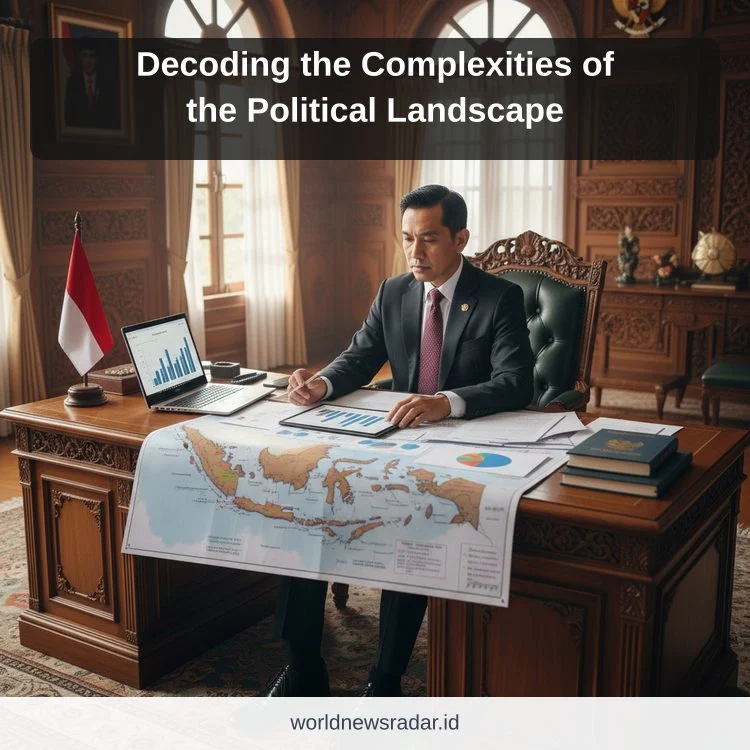
In an era defined by rapid information flow and increasingly interconnected societies, understanding the intricate workings of the political landscape has never been more crucial. From local elections to global geopolitical shifts, the decisions made within political spheres directly impact every facet of our lives, influencing economies, social structures, and individual freedoms. Many find themselves overwhelmed by the constant barrage of headlines, struggling to differentiate fact from fiction, and to grasp the underlying complexities that drive international relations and domestic policies. This article, presented by WorldNewsRadar.id, aims to demystify these often-opaque processes, offering a comprehensive look at the key elements that shape modern politics. We will delve into defining concepts, trace historical evolutions, examine the influence of various actors, and forecast future trends, providing readers with the tools to better analyze the world news and the daily political narratives they encounter.


Defining the Modern Political Landscape
The modern political landscape is a dynamic and multifaceted environment, characterized by a constant interplay of power, ideology, and governance. At its core, it encompasses the structures and processes through which societies make collective decisions, allocate resources, and regulate behavior. This includes everything from the formal institutions of government—legislatures, judiciaries, and executive branches—to the informal networks of influence exerted by interest groups, media, and public opinion. Key components include democratic systems, where citizens elect representatives; authoritarian regimes, where power is concentrated in a single entity or small group; and hybrid systems that blend elements of both. Moreover, the political landscape is deeply intertwined with economic realities, social movements, and technological advancements, each continually shaping and reshaping its contours. Understanding these foundational elements is essential for comprehending the headlines across any reputable newspaper or online news source. For instance, the rise of populist movements globally, whether in Europe or Latin America, illustrates a shift in voter sentiment away from traditional political establishments, driven by economic grievances, cultural identity concerns, and a desire for more direct forms of representation, profoundly altering national and international policies.

Historical Evolution and Key Turning Points
The political landscape has undergone dramatic transformations throughout history, with each era leaving an indelible mark on contemporary governance. From the city-states of ancient Greece, which pioneered early forms of democracy, to the vast empires that dominated much of the world, political organization has always reflected the prevailing societal values, technologies, and power dynamics. The Enlightenment, for example, ushered in revolutionary ideas of individual rights, separation of powers, and popular sovereignty, providing the philosophical bedrock for modern democratic states. The 19th and 20th centuries witnessed the rise of nation-states, the devastating impacts of two world wars, the Cold War’s ideological struggle between capitalism and communism, and the subsequent decolonization movements that reshaped the global map. These turning points weren’t merely isolated events; they were seismic shifts that redefined international relations, established new multilateral institutions like the United Nations, and influenced the internal political structures of countless countries. The fall of the Berlin Wall in 1989, for instance, marked not just the end of the Cold War but also heralded a new era of globalization and the spread of liberal democracies, though not without its challenges and subsequent rise of new geopolitical rivalries. Analyzing today’s daily news narratives often requires this historical lens to fully grasp the roots of contemporary conflicts or policy debates.
The Influence of Various Political Actors
The modern political landscape is populated by a diverse array of actors, each with their own interests, strategies, and capacities to influence change. Beyond the obvious government officials—presidents, prime ministers, parliamentarians—there are powerful non-state actors who play increasingly significant roles. Multinational corporations, for example, wield considerable economic and political clout, lobbying governments, influencing trade policies, and even shaping domestic regulations in ways that benefit their bottom lines. Non-governmental organizations (NGOs) advocate for specific causes, from human rights and environmental protection to humanitarian aid, often challenging government policies and holding them accountable. Media organizations, including traditional outlets and digital platforms, act as gatekeepers of information, shaping public opinion and setting the agenda for political discourse; their editorial stances can sway public perception significantly. Public opinion itself, especially in democratic societies, is a powerful force that politicians ignore at their peril. Furthermore, international organizations like the United Nations, the World Trade Organization, and regional blocs such as the European Union exert influence through treaties, development aid, and collective security mechanisms. The interactions between these various actors create a complex web of alliances, rivalries, and negotiations that define the daily ebb and flow of political events, as reported by any reputable online news source. Understanding these interactions is key to appreciating why certain policies are adopted or rejected, and why particular issues gain prominence on the national or international stage.
Technological Disruption and the Digital Political Sphere
Technology has profoundly reshaped the political landscape in unprecedented ways, creating a new digital political sphere that operates alongside and often intertwines with traditional politics. The internet, social media, and advanced communication tools have democratized information access, enabling citizens to stay informed, organize, and mobilize at speeds unimaginable just a few decades ago. Social media platforms, in particular, have emerged as powerful tools for political campaigning, public discourse, and even dissent, allowing movements to gain traction rapidly, as seen during the Arab Spring or various social justice protests worldwide. However, this technological disruption also brings considerable challenges. The spread of misinformation and disinformation, often amplified by algorithmic biases, poses a serious threat to democratic processes, eroding trust in institutions and polarizing societies. Cyber warfare and foreign interference in elections have become significant concerns for national security. Furthermore, data analytics and artificial intelligence are increasingly used in political strategizing, allowing campaigns to target voters with unprecedented precision, raising questions about privacy and fair electoral practices. The rapid evolution of these technologies means that governments and citizens alike are constantly adapting to new paradigms, striving to harness the benefits while mitigating the risks of this digital transformation in politics. Even established news organizations like BBC News are grappling with how to combat the spread of false narratives online while maintaining their credibility.
Economic Forces and Geopolitical Realities
Economic forces are inextricably linked to political stability and international relations, forming a crucial pillar of the modern political landscape. Global trade patterns, resource distribution, national debt, and economic inequality all have profound political implications, both domestically and on the world stage. Economic crises, such as the 2008 global financial meltdown or the more recent COVID-19 induced recession, can trigger political upheavals, lead to shifts in government, and even fuel social unrest. Furthermore, the competition for vital resources like oil, rare earth minerals, and water often underlies geopolitical tensions and conflicts between nations. The rise of economic superpowers, particularly China, has altered the global balance of power, challenging existing international orders and creating new alliances and rivalries. Trade wars, sanctions, and economic aid are regularly used as political tools to exert influence and achieve strategic goals. Domestically, economic policies related to taxation, employment, and social welfare are central to political debates and electoral outcomes, directly impacting citizens’ daily lives. For example, debates around climate change policies are often framed not just as environmental issues but also as economic ones, with concerns about job losses in traditional industries versus the creation of new green jobs. Understanding these complex economic underpinnings is vital for anyone attempting to decode the complexities of the political landscape outlined in the world news. The interplay of economics and politics shapes everything from humanitarian crises to technological innovation, making it a constant subject of scrutiny for analysts and policymakers alike. This intricate dance requires careful analysis to discern long-term trends from short-term fluctuations.
The Role of Ideology and Identity Politics
Ideology and identity politics are foundational elements that profoundly shape the modern political landscape, driving beliefs, behaviors, and conflicts within and between societies. Ideologies, whether liberalism, conservatism, socialism, nationalism, or religious fundamentalism, provide frameworks for understanding the world and prescriptive visions for how society should be organized. They inform policy preferences, electoral platforms, and the very narratives that define political discourse. For instance, debates over healthcare, education, or environmental regulations are often rooted in competing ideological perspectives on the role of the state, individual liberty, and collective responsibility. Identity politics, which centers on the shared experiences and interests of specific social groups—based on race, ethnicity, religion, gender, sexual orientation, or other characteristics—has become an increasingly prominent force. While identity-based mobilization can be a powerful driver for social justice and equality, it can also lead to fragmentation, polarization, and zero-sum political contests, as groups vie for recognition, resources, and power. The rise of nationalist movements in various parts of the world, for example, often hinges on a strong sense of collective identity and a perceived threat to that identity from external forces or internal minorities. Understanding how these ideologies and identities are constructed, mobilized, and pitted against each other is crucial for deciphering the motivations behind political actions and the deep divisions that characterize many contemporary societies. Every newspaper or daily news broadcast frequently highlights conflicts or policy disagreements that are ultimately rooted in these fundamental clashes of values and identity, making them indispensable lenses for analysis when examining current events.
Navigating and Understanding the Information Overload
In today’s hyper-connected world, the sheer volume of political information can be overwhelming, making it challenging for individuals to discern accurate, unbiased reporting from partisan propaganda or outright misinformation. Navigating this information overload requires developing critical media literacy skills. A crucial first step is to diversify your news sources, moving beyond a single preferred outlet to include a range of reputable national and international publications, such as trusted newspapers and broadcasters like BBC News. Always question the source of information: Is it a primary source or a commentary? Does the author have a known political leaning or financial interest? Cross-referencing information from multiple sources can help to verify facts and identify potential biases. Pay attention to the language used; emotionally charged or inflammatory rhetoric often indicates a lack of objectivity. Be wary of headlines that seem too sensational or perfectly confirm your existing biases, as these are often designed to capture attention rather than convey truth. Learning to identify logical fallacies and propaganda techniques, such as ad hominem attacks or guilt by association, can further aid in critical evaluation. Engaging with analytical pieces that delve into the “why” behind events, rather than just the “what,” can also deepen understanding. Furthermore, understanding the algorithms that curate your social media feeds is vital, as they often create echo chambers that reinforce existing views. Actively seeking out diverse perspectives, even those that challenge your own, is essential for a holistic grasp of the political landscape. By consciously employing these strategies, individuals can become more informed and resilient consumers of world news, capable of forming nuanced opinions and contributing constructively to political discourse.
Forecasting Future Trends and Challenges
The political landscape is in a constant state of flux, making forecasts inherently complex, yet certain emerging trends promise to redefine global governance and societal structures. One major trend is the ongoing shift in global power dynamics, with the rise of new economic and military powers challenging the post-World War II international order. This will likely lead to further competition and potentially reconfigurations of alliances, as nations jockey for influence. The increasing frequency and intensity of climate-related events are also poised to become major political disruptors, driving mass migrations, resource conflicts, and demanding unprecedented levels of international cooperation and policy innovation. Technological advancements, particularly in artificial intelligence, biotechnology, and cybersecurity, will continue to present ethical, economic, and security challenges that governments must grapple with, influencing everything from labor markets to privacy rights. The battle against global pandemics and other public health crises will remain a significant factor, testing the resilience of healthcare systems and the effectiveness of international cooperation. Domestically, the persistent issues of economic inequality, political polarization, and declining trust in institutions are likely to continue, necessitating thoughtful policy responses aimed at fostering social cohesion and inclusive growth. The role of identity politics will also continue to evolve, shaping debates on social justice, representation, and belonging. Understanding these potential trajectories is crucial for policymakers, citizens, and international organizations alike, as they navigate an increasingly unpredictable world. As WorldNewsRadar.id continues to track these developments, the imperative for robust and objective reporting will become ever more apparent to prepare citizens for the evolving challenges ahead.
Kesimpulan
Decoding the complexities of the political landscape is no small feat, but it is an essential endeavor for anyone seeking to understand the forces shaping our world. From the foundational definitions of governance and the historical currents that have brought us to this point, to the intricate interplay of political actors, technological disruptions, and economic realities, every element contributes to the grand tapestry of global and local politics. We have explored how ideologies and identity politics fuel policy debates and social movements, and provided strategies for navigating the overwhelming tide of information. As citizens, our ability to critically engage with the daily news, question sources, and seek diverse perspectives is paramount in an age where misinformation can easily sway public opinion. The future promises continued challenges, from geopolitical shifts to climate crises, underscoring the urgent need for informed participation and thoughtful leadership. By equipping ourselves with a deeper understanding of these multifaceted dynamics, we not only empower ourselves but also contribute to a more discerning and resilient society, capable of addressing the complex issues that lie ahead. Visit WorldNewsRadar.id for continuous, in-depth analysis of these critical developments.