




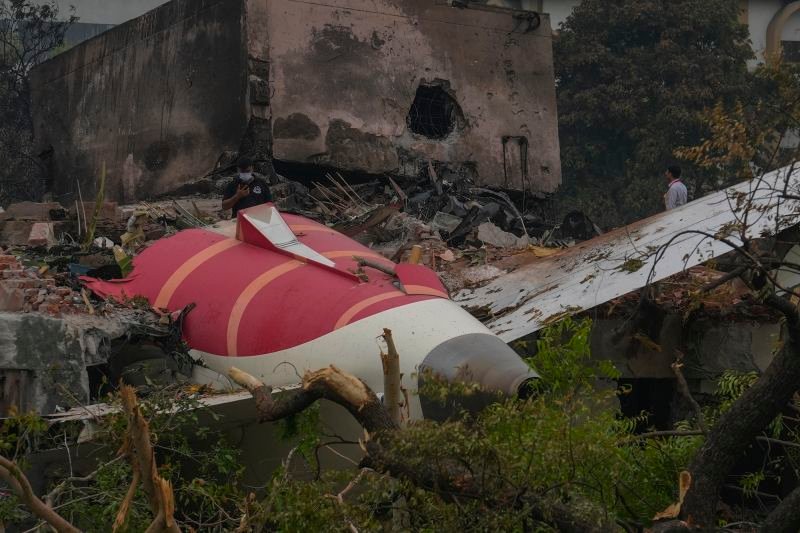


Barely out of the hospital, 40-year-old British national Vishwash Kumar Ramesh emerged with fresh wounds to carry the coffin of his brother through the streets of Diu. A poignant image from June 12’s tragic Air India Boeing 787 crash, Ramesh’s farewell underscores the human toll of India’s worst aviation disaster in decades. As authorities continue piecing together the causes, the world watches amid grief, grief, and worldwide concern.

Survival Amid Flames: Ramesh’s Miraculous Escape
1. Injured but Alive
Ramesh—carrying bandages across his face—was released from hospital just a day before leading the funeral rites for his brother. Flight AI171, bound from Ahmedabad to London Gatwick, nosedived seconds after takeoff, triggering flames that engulfed a medical hostel and claimed 241 lives aboard, plus many on the ground.
2. A Close Call
Seated in emergency exit seat 11A, Ramesh unbuckled himself post-crash and managed to walk away. “For some time, I thought I was going to die,” he told DD News. “But when I opened my eyes, I realized I was alive.” His survival is being called a miracle .
II. Grief Spreads Across Families
1. Diu’s Mourning
On Wednesday, Ramesh solemnly led the funeral procession through winding streets, embodying the collective sorrow of a community devastated by the crash.
2. Loss in Mumbai and Beyond
In Mumbai, Imtiaz Ali Syed laid to rest four family members, including his brother Javed, who had flown to India for Eid al-Adha and tragically died onboard. “He was always available for our family,” Syed mourned, speaking of the void left behind .
III. The Devastating Crash: Key Facts
1. Flight AI171’s Fatal Takeoff
On June 12 at 1:38 pm IST, the Boeing 787 Dreamliner carrying 230 passengers and 12 crew plunged 36 seconds after takeoff. The plane barely reached 600 feet prior to impact, making a mayday distress call moments before it crashed into a hostel, killing many aboard and on the ground.
2. Recovery Efforts and Identification Challenges
With wreckage engulfed in fire and smoke, identifying victims proved agonizingly difficult. Home Minister Amit Shah revealed high temperatures made visual recognition near impossible . So far, over 150 victims’ remains have been released to their families, with funerals held nationwide .
IV. Probe in Progress: Searching for Answers
1. Black Box Recovery and Analysis
Investigators recovered the cockpit voice recorder (CVR) and flight data recorder (FDR) by June 16. The devices were flown to New Delhi’s AAIB facility on June 24 under tight security. Data extraction began that very evening; the front black box’s memory module was accessed on June 25.
2. Official Investigations
India’s Aircraft Accident Investigation Bureau (AAIB), assisted by the U.S. NTSB and UK’s AAIB, is leading the probe under ICAO Annex 13 rules. A government-appointed panel is expected to deliver a preliminary report within three months.
3. Clues from Cockpit Voice Recorder
Preliminary CVR analysis indicates the pilots’ final words in the last 36 seconds before impact were “Mayday, mayday… no power.” Deployment of the aircraft’s emergency Ram Air Turbine (RAT) suggests sudden power loss.
V. Air India Fleet Checks and Safety Reforms
1. Grounding and Inspections
Air India has conducted safety inspections on 26 of its 33 Boeing 787 aircraft and is expected to complete the remainder soon. The airline also reduced widebody flights by 15% due to both inspections and Middle East disruptions .
2. Regulatory Response
The DGCA launched additional safety audits, scrutinizing pilot schedules, emergency equipment, engine controls, and fuel systems. As a result of systemic failures, three senior officials were dismissed.
VI. Expert Concerns and Industry Reactions
1. Questioning Boeing and DGCA Standards
Analysts highlight possible engine or electrical failure given the RAT deployment. One airline insider expressed concerns about delayed maintenance and oversight. A PIL in India’s Supreme Court even demanded grounding Air India’s Boeing fleet pending a full safety audit.
2. Modi’s Aviation Ambitions Tested
Despite Prime Minister Modi’s drive to modernize India’s aviation (evidenced by a new black box lab and airport expansion), the crash laid bare crucial safety gaps. The DGCA, currently understaffed, is facing criticism for its inability to keep up with rapid industry growth.
Conclusion: A Call for Safety and Closure
The loss of 241 lives aboard Flight AI171, plus dozens more on the ground, marks a grim chapter in India’s aviation history. The image of survivor Vishwash Kumar Ramesh escorting his brother’s coffin captures the tragedy’s deep emotional impact. Yet amid grief, families nationwide cling to hope, awaiting answers from a comprehensive probe.
With black box data now under analysis, experts point to possible power or engine failure as triggers. Operational overhauls—from fleet inspections to regulatory reforms—are already underway. India’s aviation sector, though expanding rapidly, must now confront its safety shortcomings to restore this crash’s most vital lesson: no growth is worth lives lost.