





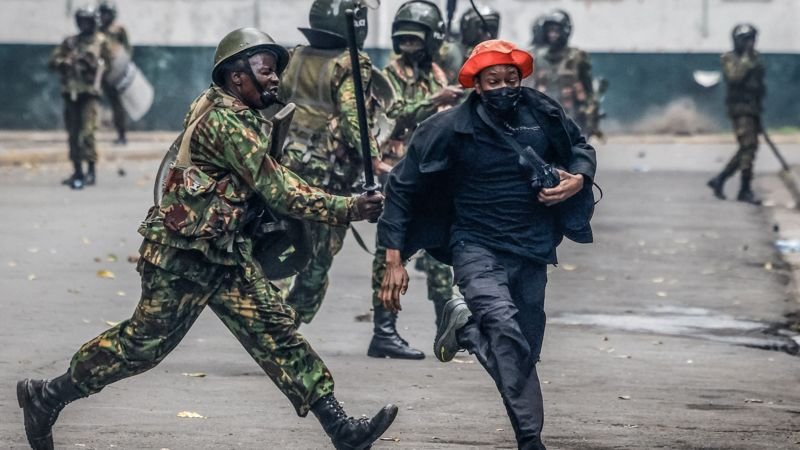


Once hailed as a beacon of democratic values in East Africa, Kenya is now facing widespread criticism for a growing wave of political repression. The recent crackdown on nationwide protests, which led to the deaths of at least 10 people and the suppression of media coverage, has triggered alarm bells not only within the country but also across the region.

Observers are increasingly drawing comparisons between Kenya and its more authoritarian neighbors—Uganda and Tanzania—raising fears that the nation may be abandoning its long-held democratic principles. Once admired for its protection of civil liberties, Kenya is now witnessing a series of disturbing incidents, including extrajudicial killings, abductions, and clampdowns on political dissent.
I. Kenya’s Democratic Foundations Under Threat
1. The Death Toll from Protests and Media Suppression
The most recent mass demonstrations, which protested against President William Ruto’s government, ended in tragedy. At least ten people were killed during the unrest, and several others were injured. Protesters were reportedly met not with dialogue, but with razor wire, armored vehicles, and what many critics described as excessive police force.
Despite images and eyewitness accounts of violent suppression, Kenya’s Interior Minister Kipchumba Murkomen praised the police’s response, accusing the protesters of attempting to stage a “coup.” He claimed the demonstrations were marred by looting, sexual assaults, and attacks on police stations, which resulted in injuries to 300 officers.
2. Law Society of Kenya Responds
The Law Society of Kenya (LSK) sharply criticized the government, arguing that the brutality demonstrated during the protests had no place in a democratic society. According to the LSK, the “unnecessary aggression and brute force” used by police forces resulted in both “senseless loss of life and destruction of property.” The group further condemned the death of 31-year-old blogger and teacher Albert Ojwang, who died in police custody after being accused of defaming a senior officer. An autopsy confirmed he succumbed to injuries from assault.
II. A Regional Mirror: Kenya, Uganda, and Tanzania
1. Uganda’s Legacy of Repression
In Uganda, President Yoweri Museveni has remained in power for nearly four decades. His regime has been marked by a continued crackdown on political opponents, including the detention of opposition figure Kizza Besigye, who faces treason charges in a military court. Ugandan authorities allege he was involved in plotting a rebellion—a charge he denies.
The militarized handling of dissent is echoed in the experiences of activists and opposition leaders throughout the region. Even those who seek refuge in neighboring countries find themselves within reach of hostile regimes.
2. Tanzania’s Fragile Promises of Reform
Tanzania’s political environment is also deteriorating. Prominent opposition leader Tundu Lissu, who survived a 2017 assassination attempt, is currently in custody facing treason charges. His party, Chadema, has been barred from contesting upcoming elections after refusing to sign what it described as an oppressive electoral code of conduct.
Despite initial hope that President Samia Suluhu Hassan would usher in reforms following the death of former President John Magufuli, many Tanzanians believe that her administration has revived authoritarian tactics.
III. Kenya No Longer a Safe Haven?
1. Cross-Border Abductions and Intelligence Collusion
There is increasing evidence that Kenyan authorities may be cooperating with their regional counterparts in suppressing opposition voices. Kizza Besigye, for instance, vanished in Nairobi while attending a book launch, only to reappear in a Ugandan military court. Uganda later accused him of attempting to purchase weapons in Kenya and claimed his arrest was part of a cross-border operation sanctioned by Kenyan intelligence.
Similarly, Tanzanian activist Maria Sarungi Tsehai reported being abducted in Nairobi by armed men. Though later released, she was physically assaulted and questioned about her whistleblowing activities and access to her social media accounts.
2. Shrinking Space for Regional Solidarity
In May, Kenyan human rights lawyer Martha Karua and two other activists were deported from Tanzania for showing support for Tundu Lissu. Other Kenyan and Ugandan activists, including Boniface Mwangi and Agather Atuhaire, were detained and allegedly sexually abused by Tanzanian police—a claim the authorities denied. President Samia later issued a stark warning against foreign activists meddling in Tanzanian politics, accusing them of sowing chaos in their own countries.
President Ruto’s response was equally concerning for activists. Rather than condemning the abuse, he offered an apology to Tanzania, saying, “If there is anything that Kenyans have done that is not right, we want to apologise.”
IV. A Continent-Wide Democratic Backslide?
Despite the mounting evidence of democratic erosion in Kenya, Tanzania, and Uganda, global organizations have offered little more than rhetorical concern. Martha Karua criticized the African Union and the United Nations for their silence and the lack of meaningful intervention. She also pointed to the diminished moral authority of the United States under Donald Trump’s administration, which has faced its own democratic challenges.
Kenyan professor Macharia Munene believes Ruto’s subdued stance is an attempt to demonstrate regional control. According to Munene, Tanzania’s leaders fear that Kenya’s activist community could influence upcoming elections and are pressuring Kenya to contain its dissenters.
Conclusion: A Crossroads for Democracy in East Africa
The events unfolding in Kenya are not isolated—they are part of a broader trend of authoritarian resurgence in East Africa. From Uganda’s longstanding dictatorship to Tanzania’s recent political crackdowns, and now Kenya’s alarming descent, the region is witnessing a coordinated clampdown on dissent.
While each country faces its unique challenges, there is a growing sense of solidarity among opposition leaders and activists. As Boniface Mwangi aptly put it, “If these people are united in oppressing their citizens, then we must be united in fighting to remove them from power.”
The fate of democracy in East Africa now rests on this fragile but determined resistance. Civil society must continue to push back, regional solidarity must be strengthened, and the international community must hold these governments accountable—not just in words, but in action.
Until that happens, the dream of a democratic East Africa remains at risk.








