




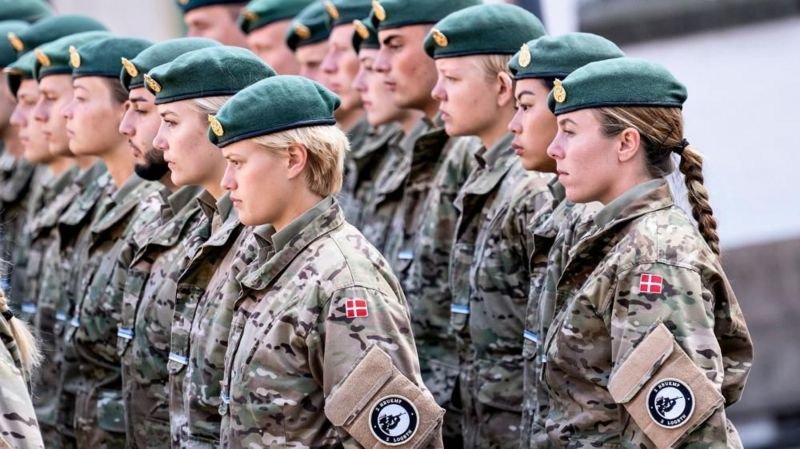


Denmark has introduced a landmark policy shift that now requires women to register for military conscription when they turn 18, aligning with longstanding obligations for men. Under new legislation, which came into effect this week, both young men and women will participate in a lottery system that may see them called up for an extended 11-month military service. This change reflects Denmark’s effort to strengthen its defense capabilities in response to increasing security threats in Europe and follows similar moves made by neighboring Nordic countries.

I. Gender Equality in National Defense
1. From Voluntary to Mandatory Service for Women
Until recently, Danish women could choose to enlist for military service on a voluntary basis once they reached adulthood. While around 24% of the roughly 4,700 individuals who completed basic military training in 2024 were women, participation remained optional for females.
With the updated legislation, however, young women will now be required to register for conscription just like their male peers. Although the system still prioritizes voluntary enlistment, any remaining quotas will be filled through a random lottery draw that includes both genders.
2. Extending the Duration of Service
Alongside the gender inclusion reforms, the duration of Denmark’s conscription has also been extended. Previously set at four months, the new rule mandates an 11-month service period for those selected through the draft. The change is intended to ensure more comprehensive training and readiness among conscripts, preparing them for real-world operational demands.
The Danish government projects that this revision will increase annual participation in military service to approximately 6,500 conscripts by the year 2033.
II. Regional and Strategic Implications
1. A Trend in the Nordic Region
Denmark’s decision places it alongside neighboring countries like Sweden and Norway, both of which have already implemented gender-inclusive conscription models. The regional shift highlights a broader cultural and strategic commitment to equality and collective defense amid an evolving geopolitical landscape.
Norway introduced universal conscription for both men and women in 2015, while Sweden followed suit shortly thereafter. These moves reflect a growing consensus across Northern Europe that inclusive defense policies are vital for national and regional security.
2. Meeting NATO Requirements
The expansion of military conscription is part of Denmark’s broader effort to meet its commitments to the North Atlantic Treaty Organization (NATO). In March, the Danish government unveiled a 40.5 billion Danish crown ($5.9 billion) boost in defense funding over the next five years, underscoring its intent to align with NATO’s defense spending targets.
The country currently maintains a professional military force of approximately 9,000 personnel. By incorporating more conscripts into its defense framework, Denmark aims to reinforce its armed forces and respond more effectively to modern security challenges.
III. Leadership and Public Support
1. Military Officials Back the Reform
Colonel Kenneth Strom, who oversees Denmark’s conscription program, emphasized that the policy update is not only a political directive but also a strategic necessity. According to Strom, the reforms aim to enhance Denmark’s “combat power” and ensure that conscripts develop the vital skills needed to support the Army, Navy, Air Force, or Special Operations Forces.
He explained, “This is a political decision rooted in the current security climate. It’s about having more capable people ready to serve and defend the country.”
2. Perspective from the Ranks
Katrine, a current volunteer in the Danish military, spoke to Reuters about her views on the new policy. She expressed strong support for the inclusion of women in the conscription system, arguing that shared responsibility strengthens national unity and readiness.
“In today’s global situation, it’s crucial to have more people trained and prepared. Women should contribute just as much as men, and I believe this is a positive step forward,” she said.
IV. Broader Impact and Future Outlook
1. Enhancing Gender Equality
This policy marks a significant advancement for gender equality in Denmark’s defense sector. By formally integrating women into the conscription framework, the government is signaling its commitment to equal civic duties and opportunities in national defense.
Advocates argue that the reform not only strengthens the military but also promotes broader societal equality, as both men and women now share an equal stake in the nation’s security responsibilities.
2. Responding to European Security Tensions
The timing of this policy update coincides with rising instability across Europe, particularly due to ongoing conflicts and geopolitical tensions. Countries within NATO are ramping up their defense postures, investing in modernization, and reinforcing national readiness to counter potential threats.
Denmark’s decision to include women in conscription is viewed as part of a wider recalibration of defense policies aimed at preparing for an uncertain future. The growing military engagement among European nations reflects a shift in strategic thinking that emphasizes preparedness, adaptability, and inclusiveness.
3. A Long-Term Commitment
With a timeline extending to 2033 for fully realizing the expanded conscription target, Denmark is clearly looking ahead. The approach not only reinforces short-term defense capabilities but also lays the foundation for a more resilient and flexible military in the long run.
Observers note that while conscription numbers are expected to rise gradually, the policy sends an important message about Denmark’s dedication to maintaining peace and stability through shared responsibility.
Conclusion
Denmark’s move to make military conscription mandatory for women represents a major policy evolution in response to shifting security dynamics and societal values. As the nation modernizes its armed forces and meets NATO obligations, gender inclusivity in military service has become a focal point of reform. Supported by military leadership and embraced by a growing segment of the population, the updated policy not only boosts national defense readiness but also reinforces the principle of equal civic duty.
In a world increasingly marked by unpredictability, Denmark’s commitment to inclusive and strengthened military preparedness may serve as a model for other nations grappling with similar challenges.