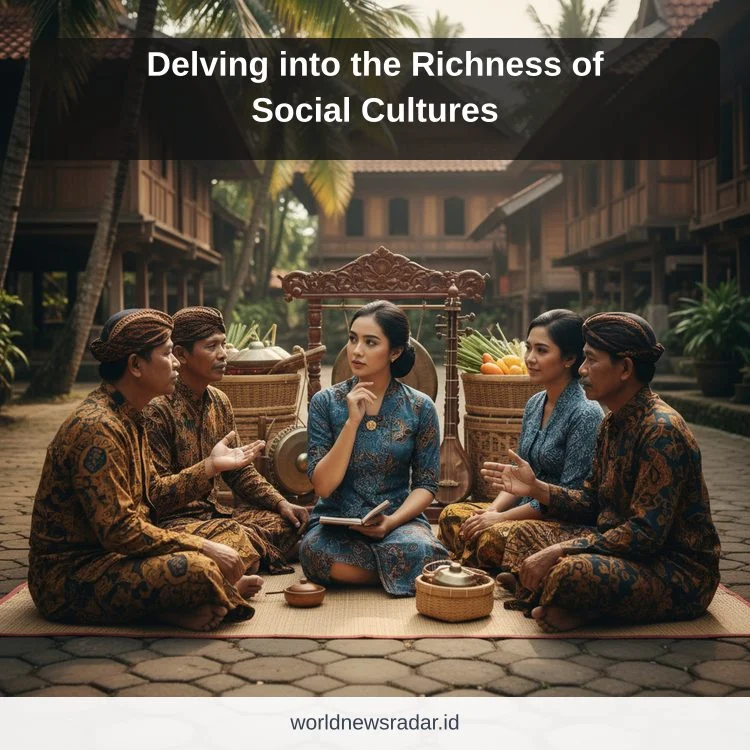
In our increasingly interconnected yet often segmented world, understanding the intricate tapestry of human existence becomes paramount. Every day, news headlines from every corner of the globe highlight the profound impact of cultural differences and similarities on politics, economy, and social dynamics. From the nuanced diplomatic negotiations reported by World News Radar to the detailed economic analyses available through various online news platforms, the underlying currents of social culture invariably shape events. Why do certain societies thrive while others struggle? How do local customs influence global markets? These questions underpin much of what we read, whether it’s a deep dive into the latest geopolitical shifts or a detailed report on technological advancements. This article delves into the fascinating and multifaceted world of social cultures, exploring their origins, evolution, and pervasive influence on human interaction, providing a comprehensive understanding of why these often-invisible forces are so critical in shaping our daily news and future. We aim to unravel the complexities and highlight the enduring importance of cultural literacy in navigating our diverse, globalized landscape.


The Foundations of Social Culture: Shared Understanding and Identity
Social culture, at its core, is the collective programming of the mind that distinguishes members of one group or category of people from others. It encompasses shared beliefs, values, customs, behaviors, artifacts, and institutions that are learned, shared, and transmitted across generations. This foundational layer dictates how individuals perceive the world, interact with one another, and derive meaning from their existence. For instance, consider the fundamental differences in communication styles: high-context cultures, prevalent in many East Asian societies, rely heavily on non-verbal cues, shared understandings, and indirect communication, often requiring extensive knowledge of the social context to fully grasp a message. Conversely, low-context cultures, commonly found in Western Europe and North America, prioritize explicit verbal messages and directness. These divergent approaches to communication, as frequently observed in international negotiations covered by daily news, can lead to misunderstandings or fostering strong alliances. Furthermore, the concept of individualism versus collectivism significantly shapes social structures. Individualistic cultures, like the United States, emphasize personal achievement and independence, whereas collectivistic cultures, such as Japan, prioritize group harmony and interdependence. These ingrained cultural frameworks are not static; rather, they are dynamic entities continuously evolving through internal innovations, external influences, and the changing global landscape, defining the very essence of a community’s identity and interaction with the broader world.

Cultural Transmission: Education, Family, and Media’s Role
The perpetuation of social culture across generations is a complex process primarily driven by three powerful institutions: family, education, and media. The family serves as the primary agent of socialization, where children first learn language, values, norms, and basic social behaviors. For example, in many Latin American cultures, extended family ties are incredibly strong, providing a robust support network and influencing decision-making processes from personal choices to financial matters. This familial emphasis contrasts sharply with more nuclear family-oriented societies, where individual autonomy is often encouraged from an early age. Education systems further reinforce these cultural tenets by transmitting formal knowledge alongside implicit lessons on patriotism, civic duty, and social etiquette. A curriculum might emphasize national heroes, historical narratives that shape collective identity, or artistic forms revered within that culture. Think of the emphasis on classical literature in European education or the focus on traditional arts in Asian classrooms. Moreover, modern media – from traditional newspapers and television to increasingly dominant online news platforms and social media – plays a profound role in shaping and reflecting cultural norms. It disseminates information, influences opinions, and showcases particular lifestyles, often creating or reinforcing cultural trends. For instance, global entertainment industries, like Hollywood or K-Pop, have become powerful vectors for transmitting cultural ideas, fashion, and values across continents, sometimes leading to cultural homogenization or, conversely, fostering new subcultures that blend local and global influences. This intricate dance between these three pillars ensures that cultural heritage endures, adapts, and continues to define collective identities.

The Impact of Economic Systems on Social Fabric
Economic systems are not merely mechanisms for wealth distribution; they profoundly shape the social fabric of a community, influencing values, aspirations, and daily interactions. A capitalist economy, with its emphasis on individual enterprise, competition, and material accumulation, often cultivates a culture of individualism and innovation. For instance, reports on the rise of Silicon Valley in the daily news frequently highlight its pervasive “start-up culture,” characterized by risk-taking, long working hours, and a relentless pursuit of groundbreaking technology. This entrepreneurial spirit, while driving immense economic growth, can also lead to social stratification and pressure to constantly achieve. Conversely, socialist or communal economic structures, prevalent in certain historical or indigenous societies, tend to foster a culture of collective responsibility, mutual support, and egalitarianism. Here, the emphasis shifts from individual profit to community well-being, often resulting in stronger social safety nets and a greater sense of solidarity. Consider the cooperative farming systems found in some rural communities, where resources and labor are shared for the benefit of all, reinforcing strong community bonds. Furthermore, the transition from an agrarian economy to an industrial or post-industrial one brings significant cultural shifts. Industrialization often leads to urbanization, the breakdown of traditional family structures, and the emergence of new class divisions, all of which reshape social norms and aspirations. The growing digital economy, as frequently discussed in online news and cryptocurrency reports, is now creating new forms of work, virtual communities, and challenging traditional notions of ownership and value, leading to evolving social cultures centered around digital identities and online interactions. These economic realities are intricately woven into the very DNA of a society’s culture, dictating not just how people earn a living but how they live their lives.
Cultural Clashes and Adaptations in a Globalized World
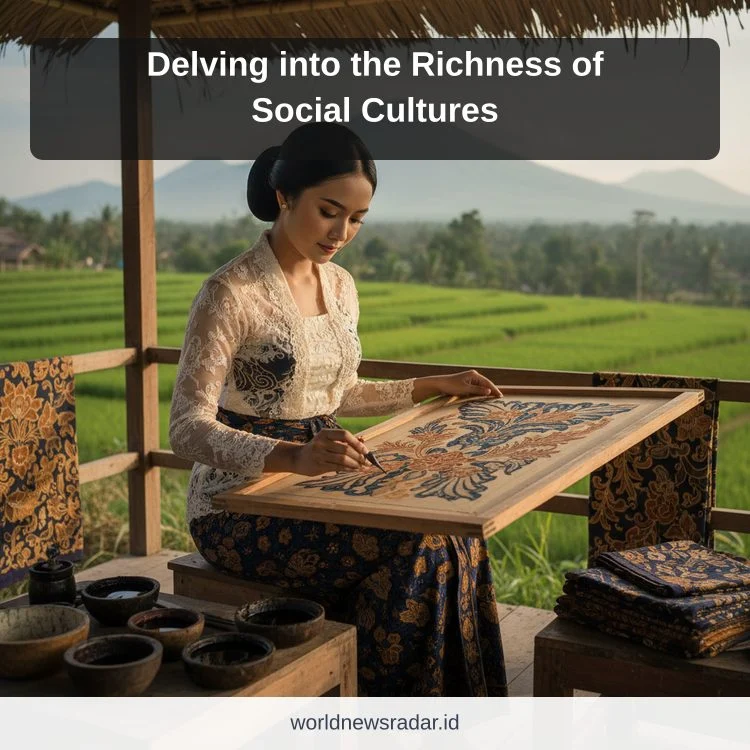
Globalization, a defining characteristic of our modern era, has accelerated the interaction and often the friction between diverse social cultures, leading to both clashes and remarkable adaptations. The increased flow of goods, people, and ideas across national borders means that distinct cultural practices are constantly encountering, influencing, and sometimes confronting one another. One prominent example is the ongoing debate around cultural appropriation, where elements of a minority culture are adopted by a dominant culture without proper understanding, respect, or acknowledgment of their origins. This issue, often highlighted in social culture columns of various online news outlets, underscores the sensitivity required when navigating cross-cultural exchanges. Conversely, globalization has also spurred fascinating instances of cultural fusion and adaptation. Fusion cuisine, where culinary traditions from different parts of the world are blended to create new gastronomic experiences, is a delicious illustration of this phenomenon. Think of the popularity of sushi burritos or Korean tacos, which have successfully merged distinct culinary heritage into innovative and widely appealing dishes. Similarly, music genres like “world music” showcase the creative amalgamation of various musical styles and instruments, resulting in rich, diverse sounds that transcend geographical boundaries. However, these interactions are not always harmonious. Political and religious differences, rooted deeply in distinct cultural values, frequently lead to international conflicts and social tensions, which become front-page world news. Understanding the underlying cultural dimensions of these conflicts, as often analyzed in detail by major news organizations and independent online news platforms, is crucial for fostering peaceful resolutions and promoting mutual respect. The constant negotiation between tradition and modernity, local identity and global influence, remains a central challenge and opportunity in our interconnected world.
Preserving Cultural Heritage in the Digital Age
The digital age, while accelerating globalization, also presents both unprecedented challenges and powerful opportunities for preserving and promoting cultural heritage. With the vast accessibility of online platforms, there’s a risk of cultural homogenization, where dominant global narratives and aesthetics overshadow unique local traditions. News reports frequently cover concerns about the erosion of indigenous languages or the declining participation in traditional ceremonies as younger generations become more immersed in global digital cultures. However, the same digital tools offer incredible potential for preservation. Digital archiving projects, for instance, allow ancient texts, traditional music, and visual arts to be cataloged, digitized, and made accessible to a global audience, ensuring their survival even if physical artifacts are lost. Think of initiatives like the Google Arts & Culture project, which partners with museums worldwide to bring their collections online, offering virtual tours and detailed information about cultural artifacts that might otherwise be out of reach for many. Social media platforms and online news sites also provide powerful avenues for cultural expression and revitalization. Communities can use these tools to share their traditions, narratives, and contemporary cultural forms with a broader audience, fostering a sense of pride and connection among diaspora communities. For example, indigenous groups are increasingly using platforms like YouTube or TikTok to teach their languages, share traditional dance, and address contemporary issues from their unique cultural perspectives. Educational initiatives, often supported by organizations like UNESCO and widely reported in international news, leverage digital technology to create interactive learning experiences about diverse cultures. These efforts demonstrate that while the digital age poses existential questions for cultural heritage, it simultaneously provides innovative solutions for its endurance and flourishing, ensuring that the richness of human expression continues to inspire and inform future generations.
Kesimpulan
The journey through the intricate landscape of social cultures reveals a fundamental truth: our world is not merely a collection of nations but a vibrant mosaic of human experiences, values, and traditions. From the daily news headlines that shape our understanding of political economies to the subtle nuances of human interaction, culture is the invisible yet incredibly powerful force that underpins everything. We’ve explored how shared understandings form the bedrock of identity, how family, education, and media faithfully transmit these legacies, and how economic systems profoundly shape the very fabric of society. Moreover, we’ve witnessed the dynamic interplay of cultural clashes and adaptations in response to globalization, and recognized the dual role of the digital age in both challenging and preserving heritage. To truly comprehend the complex narratives presented by World News Radar or any major online news outlet, one must first appreciate the cultural lenses through which these stories are created and received. Embrace this understanding, seek out diverse perspectives, and actively engage with the myriad cultures that enrich our global community. Continue to explore, question, and learn, for in doing so, you contribute to a more empathetic, informed, and interconnected world.