





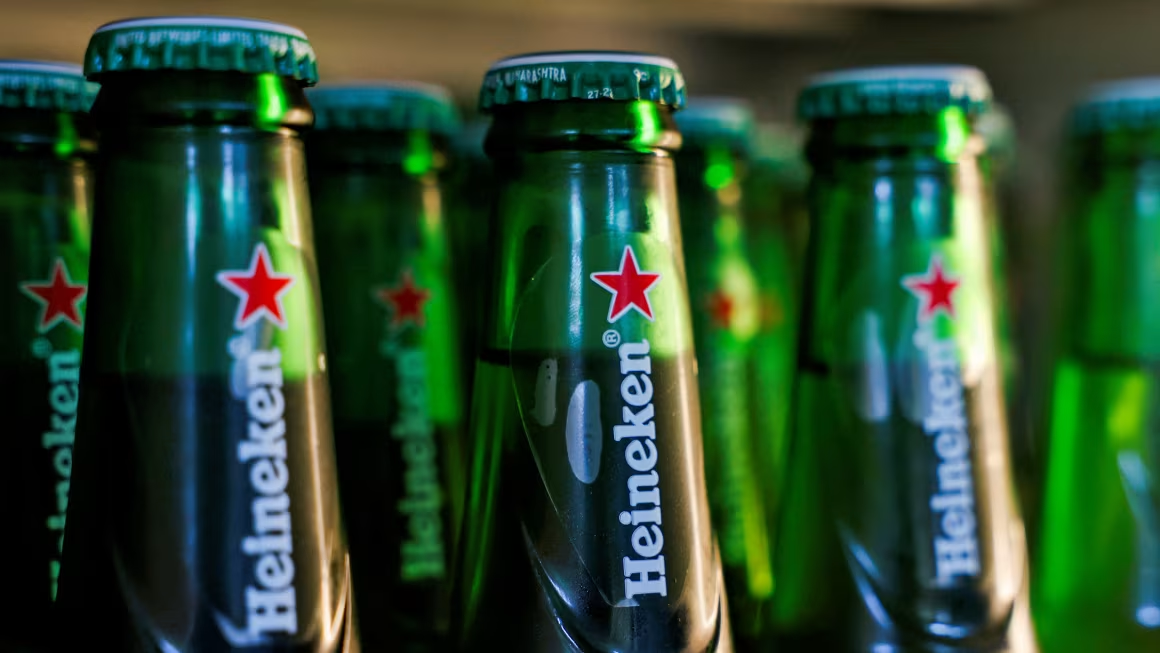


The Dutch brewing giant Heineken has officially confirmed the loss of operational control over its facilities in conflict-affected regions of eastern Democratic Republic of Congo (DRC), withdrawing all remaining personnel amid rising instability. This move marks a significant development for the company, which had previously paused activities in key eastern cities due to ongoing violence.

I. Heineken’s Withdrawal and Security Concerns
1. Armed Groups Seize Facilities in Goma and Bukavu
Heineken announced on Friday that its local subsidiary, Bralima, no longer maintains operational control over breweries in Goma and Bukavu, two major eastern Congolese cities currently under the influence of armed rebel forces. The company’s decision followed increased hostilities and the occupation of its facilities by armed individuals.
2. Suspension of Operations Since March
Earlier this year, the company suspended activities in three eastern cities — Goma, Bukavu, and Uvira — citing safety concerns amid mounting clashes between government forces and the M23 rebel group. Though operations were halted in March, Heineken hoped to resume business when conditions stabilized. That hope has now dissipated as the situation worsens.
II. Impact on Employees and Business
1. Staff Withdrawn and Supported Financially
Heineken emphasized that its foremost concern is the well-being of its workers. “We have withdrawn all remaining staff from these sites and we have continued to support them financially,” the company said in a public statement dated June 12, 2025. The Bukavu location alone had employed approximately 1,000 people, both directly and through contracted services.
2. Continued Operations in Other Regions
Despite setbacks in the east, Bralima continues to operate in parts of the DRC unaffected by the conflict. The company reiterated that it is closely monitoring the security landscape and will adjust its strategy as needed. Bralima, which also produces popular local beer brands like Primus alongside Heineken, runs a total of four breweries across the country.
III. Financial and Strategic Implications
1. Strategic Importance of the Region
Eastern Congo has long been a strategic market for Heineken. Combined operations in Goma, Bukavu, and Uvira previously contributed to roughly one-third of the company’s total output in the DRC. With a national population exceeding 100 million, Congo remains a crucial part of Heineken’s business footprint in Africa.
2. Revenue Contributions from Africa
Nearly 14% of Heineken’s total global revenue comes from its Middle East and Africa division. Losing access to such a significant portion of its Congolese operations could potentially impact the company’s financial performance in the region, particularly if the disruption continues for an extended period.
IV. Escalating Conflict in Eastern Congo
1. M23 Rebel Group’s Offensive
The latest operational setbacks coincide with an intensification of armed conflict in the region. The M23 rebel group has launched a rapid and strategic advance in eastern Congo, seizing large swaths of territory and heightening fears of a broader regional war. Their resurgence has displaced civilians and jeopardized commercial activity.
2. Alleged Involvement of Rwanda
The Congolese government has accused neighboring Rwanda of supporting M23 by supplying troops and weaponry — claims that Rwanda has consistently denied. The issue has strained regional diplomacy and drawn the attention of international stakeholders, including the United States.
V. Diplomatic Developments and Peace Efforts
1. Preliminary Peace Agreement Drafted
In a potential step toward de-escalation, representatives from Congo, Rwanda, and the United States announced on Wednesday that their technical teams had initialed a draft peace agreement. The signing is expected to take place within the coming week, offering a glimmer of hope for conflict resolution.
2. Implications for Business and Civil Stability
If a peace accord is successfully concluded and enforced, it could pave the way for greater stability in the region and the eventual return of foreign businesses like Heineken. However, given the history of fragile truces in the region, optimism remains cautious.
Conclusion
Heineken’s decision to pull out of eastern Congo underscores the deepening crisis in the region and the significant risks faced by foreign companies operating in unstable environments. While the company continues to operate elsewhere in the country, the loss of control over key facilities in Goma and Bukavu represents a blow to its African strategy. As diplomatic efforts attempt to forge a path toward peace, both international investors and local populations are watching closely for signs of lasting stability.








