





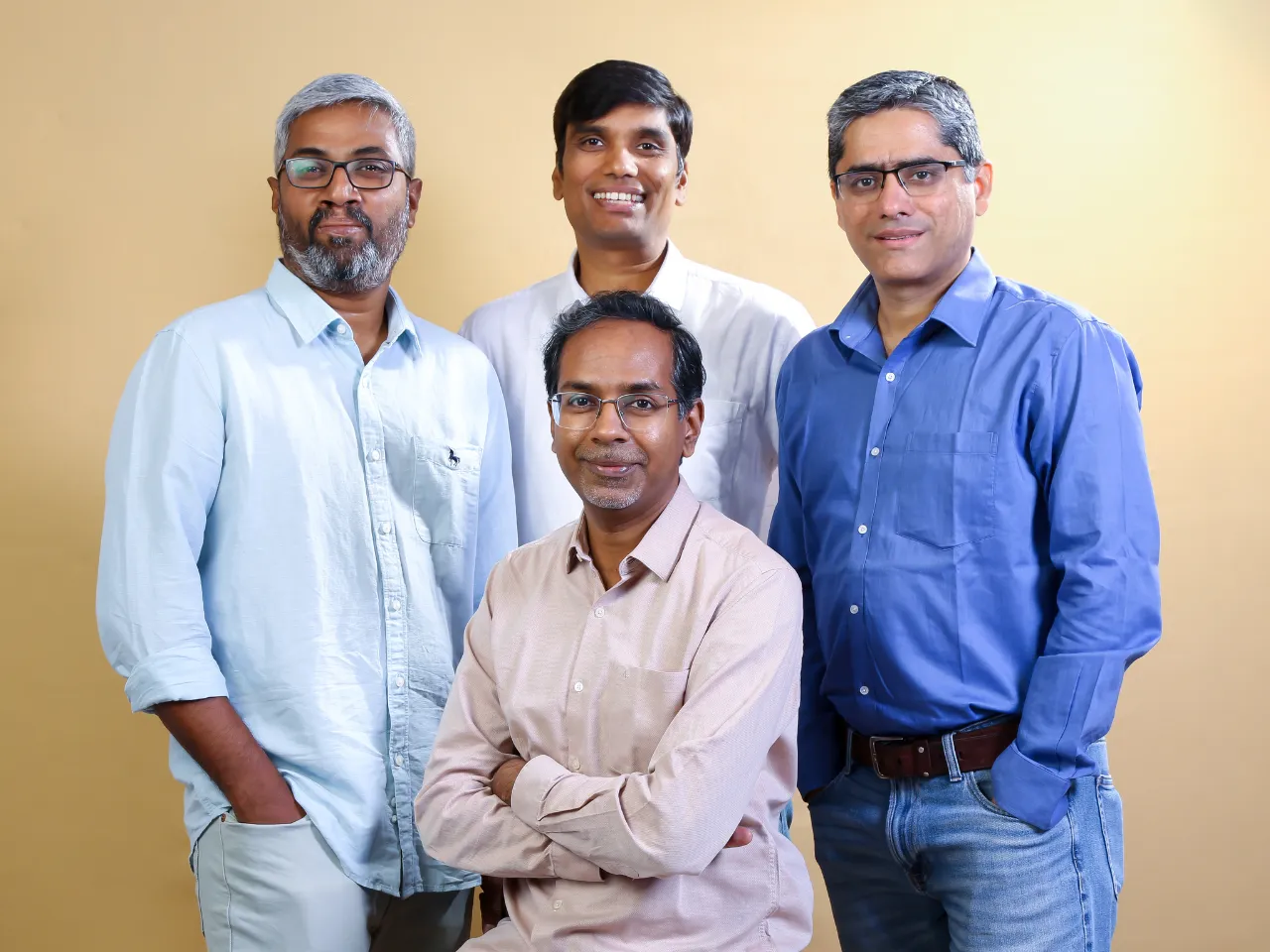


Bengaluru-based deep tech company Maieutic Semiconductor has raised $4.15 million in seed funding, a key development in its mission to modernize the semiconductor industry through generative AI. The investment round was co-led by Endiya Partners and Exfinity Venture Partners, with the funds set to accelerate Maieutic’s vision of transforming analog chip design—an area that has remained resistant to automation for decades.


I. Redefining Semiconductor Design with Generative AI
1. A New Approach to a Long-Standing Challenge
Maieutic Semiconductor was founded with a clear purpose: to tackle one of the most intricate and underserved challenges in technology—semiconductor design. With an industry that has long relied on manual processes and expert knowledge, particularly in analog chip design, Maieutic aims to bring a paradigm shift by embedding generative AI into the design and development pipeline.

The company’s founders, Gireesh Rajendran (CEO), Ashish Lachhwani (Chief Business Officer), Rakesh Kumar (Chief Product Officer), and Krishna Sankar (Chief Technology Officer), are seasoned entrepreneurs and industry professionals who bring decades of semiconductor and AI experience.
2. Streamlining Workflows and Accelerating Innovation
The GenAI-first platform developed by Maieutic is engineered to optimize and accelerate early-phase chip design, facilitate expert reviews, and deliver intelligent analysis of design trade-offs. By automating tasks that would typically require extensive manual input and weeks of iteration, Maieutic’s solution reduces time-to-market dramatically while improving design efficiency.
“Semiconductor design has remained largely untouched by modern productivity enhancements,” said CEO Gireesh Rajendran. “We’re creating a copilot for chip designers—one that identifies inconsistencies early and brings intelligence to every decision made along the way.”
II. Building on Industry Expertise and Proven Leadership
1. Led by Veterans with a Track Record of Success
CEO Gireesh Rajendran previously co-founded and led Steradian Semiconductors, a radar technology firm that saw a successful acquisition. His extensive experience in both technical and entrepreneurial roles positions Maieutic as a serious contender in the AI-semiconductor space.
The founding team collectively brings deep expertise in analog/mixed-signal design, product development, and global semiconductor operations. Their blend of technical know-how and business acumen is key to navigating one of the most complex corners of the tech landscape.
2. Strong Endorsements from Strategic Investors
Sateesh Andra, Managing Partner at Endiya Partners, praised Maieutic’s mission, stating:
“Analog workflows have traditionally been slow and expertise-heavy. Maieutic’s generative AI approach is a game changer. The team’s deep understanding of both the technology and the market makes them uniquely capable of addressing this long-standing challenge.”
Chinnu Senthilkumar, Managing Partner at Exfinity Venture Partners, echoed this sentiment:
“Having started my career in analog/mixed-signal design, I know firsthand how difficult and nuanced this field is. Maieutic’s vision to bring GenAI into analog design is bold, and their platform has the potential to reshape an entire industry.”
III. Capital Deployment and Vision for the Future
1. Scaling the Engineering Team
A significant portion of the seed funding will go toward expanding Maieutic’s engineering workforce. With ambitious goals on the horizon, the startup aims to attract top-tier talent to further enhance its platform, refine its algorithms, and support increased customer adoption.
2. Enhancing Product Capabilities and Market Readiness
In addition to talent acquisition, Maieutic plans to invest in product development to deliver even more powerful automation tools. The goal is to support comprehensive design cycles, from early simulation to production-grade validation, using AI as a co-pilot to assist engineers in every step.
3. Speeding Up Time-to-Market
Reducing time-to-market is one of Maieutic’s core value propositions. By drastically cutting down the number of iterations required in traditional analog workflows, their AI-driven platform enables chipmakers to innovate faster, meet market demands, and reduce costs—an advantage especially crucial in today’s competitive global chip market.
IV. Broader Impact on the Semiconductor Ecosystem
1. Disrupting a Traditionally Resistant Sector
While automation has made strides in digital chip design, the analog segment has remained largely manual and time-consuming. Maieutic’s AI-first platform targets this exact pain point, aiming to disrupt an area that has seen little technological overhaul in decades.
2. Aligning with Global Trends in Chip Demand
The global appetite for high-performance, energy-efficient chips continues to grow, particularly in sectors like automotive, telecommunications, and edge computing. Maieutic is positioned to provide the tools necessary to meet these demands faster and more effectively, ensuring their platform remains relevant in a rapidly evolving tech landscape.
3. Driving AI Adoption in Deep Tech from India
By building a category-defining AI platform from India, Maieutic not only enhances the country’s presence in the global semiconductor industry but also demonstrates the potential of Indian startups to lead deep tech innovation. Backed by investors with experience in global markets, the startup is poised to make a meaningful impact beyond national borders.
Conclusion
Maieutic Semiconductor’s $4.15 million seed funding round is more than just an investment—it’s a validation of a bold vision to overhaul analog chip design through generative AI. By automating time-intensive workflows, the company is redefining what’s possible in one of the most complex areas of technology. With the backing of seasoned investors and a founding team that understands both the technical and strategic nuances of semiconductor development, Maieutic is on track to become a transformative force in the industry. As demand for smarter chips grows, Maieutic’s GenAI-first platform may well become the industry standard for the next generation of chip design.








