





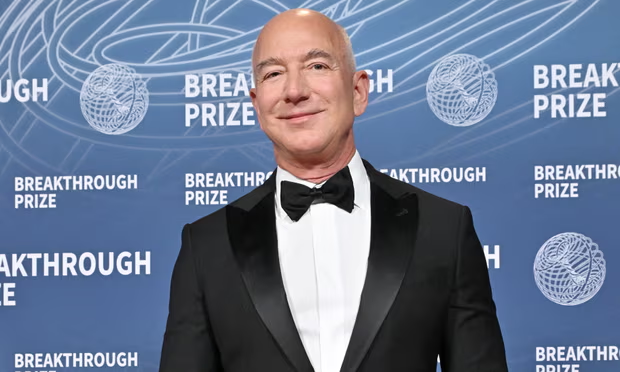


Jeff Bezos, the founder and executive chair of Amazon, is gearing up to sell a significant portion of his holdings in the tech giant. A recent regulatory filing reveals that Bezos intends to offload up to 25 million Amazon shares—valued at around $4.75 billion based on recent prices—over the next year. This move comes on the heels of a $13.4 billion stock sale last year and coincides with broader questions about Amazon’s future performance in light of rising tariffs and political tensions. While the company continues to post strong earnings, investor sentiment appears increasingly cautious.


I. A Strategic Stock Sale by One of the World’s Richest Individuals
1. The Scope and Timing of the Sale
According to the regulatory documents filed last Friday, Bezos has initiated a structured plan to sell up to 25 million Amazon shares. This plan, which extends until May 29, 2026, is expected to bring in approximately $4.75 billion, based on Thursday’s closing stock price. These sales are part of a broader trend by Bezos, who sold $13.4 billion worth of Amazon shares in 2024.

Bezos remains the second wealthiest person globally, with a net worth estimated at $212 billion, according to Bloomberg’s billionaire index. He trails only Elon Musk, whose fortune stands at around $332 billion.
2. Market Reaction and Broader Financial Context
The announcement came shortly after Amazon released its financial results for the first quarter of 2025. The company reported revenue of $155.7 billion—a 9% year-over-year increase—and a profit of $17.1 billion. However, despite the positive earnings, Amazon’s stock declined slightly in after-hours trading, reflecting investor unease surrounding potential impacts from Donald Trump’s renewed trade tariffs, especially on goods from China.

II. Tariff Concerns and Their Impact on Amazon
1. CEO Andy Jassy Speaks on the Uncertainty
Amazon’s CEO, Andy Jassy, addressed the tariff situation during a call with analysts, highlighting the unpredictability of the trade environment. He noted, “It’s hard to tell with tariffs how they’re going to settle and when they’re going to settle.” Jassy emphasized the importance of offering customers a broad product range at competitive prices, especially in an unstable economic climate.
Prices across Amazon’s online marketplace have already begun to climb since the reintroduction of tariffs in early April, with Chinese imports being particularly affected.
2. Political Friction with the White House
Tensions between Amazon and the U.S. government escalated last week when the White House criticized the company for allegedly planning to alert shoppers to the financial impact of Trump’s tariffs during checkout. The administration labeled this as a “hostile and political act.”
Amazon quickly distanced itself from the controversy, clarifying that while the concept had been explored by Amazon Haul—its discount-oriented shopping division—it was ultimately dismissed. The clarification aimed to temper political fallout and reassure stakeholders of the company’s neutrality.
III. The Evolving Relationship Between Bezos and Trump
1. From Public Criticism to Political Engagement
Historically, Bezos and Trump have had a contentious rapport. During the 2016 U.S. presidential campaign, Bezos publicly criticized Trump’s rhetoric, suggesting it posed a threat to democratic values. In turn, Trump accused Amazon of exploiting tax loopholes and paying insufficient taxes.
Despite their differences, Bezos appears to have shifted his stance in recent years. He attended President Trump’s second inauguration earlier this year, alongside several other leaders in the tech industry. Moreover, Bezos contributed $1 million to the inauguration fund, signaling a new phase in their relationship.
2. The Washington Post’s Editorial Shift
Adding to the intrigue is the recent editorial shift at The Washington Post, a newspaper owned by Bezos. In a departure from tradition, the publication refrained from endorsing a candidate in the latest U.S. presidential election—the first time in over thirty years. Then, in February, the paper revamped its opinion section with a clear editorial mission: to advocate for personal freedom and market-based principles. Bezos explained the shift as an effort to emphasize the defense of “two pillars: personal liberties and free markets.”
IV. Investor Sentiment and the Road Ahead
1. Amazon’s Stock Shows Modest Decline
Following the filing and amid tariff concerns, Amazon’s share price dipped nearly 1% during early trading on Wall Street last Friday. While modest, this decline underscores the market’s sensitivity to political developments and executive decisions at major firms.
Despite strong revenue and profit figures, investor caution appears to be growing, particularly in anticipation of how global trade dynamics could affect Amazon’s supply chains, pricing strategy, and customer demand.
2. Long-Term Implications for Amazon and Tech Stocks
As one of the largest and most influential technology companies in the world, Amazon’s trajectory often sets the tone for broader market sentiment. With tariffs threatening to increase operational costs and reduce consumer affordability, Amazon’s performance will be closely watched by investors and analysts alike.
Bezos’s planned divestiture adds another layer of complexity. While insiders frequently sell stock for a variety of reasons, such significant sales by a company founder often invite scrutiny, especially when coupled with economic uncertainty.
Conclusion
Jeff Bezos’s decision to sell $4.75 billion worth of Amazon shares over the coming year reflects both a personal financial strategy and the shifting landscape facing big tech firms. As Amazon continues to grow revenue and navigate international trade challenges, questions remain about the longer-term implications of political friction and economic policy on its business model. At the same time, Bezos’s evolving relationship with the Trump administration and editorial direction at The Washington Post highlight a broader narrative about influence, leadership, and adaptation in uncertain times. For investors, consumers, and policymakers alike, Amazon’s next chapter will be one worth watching closely.








