





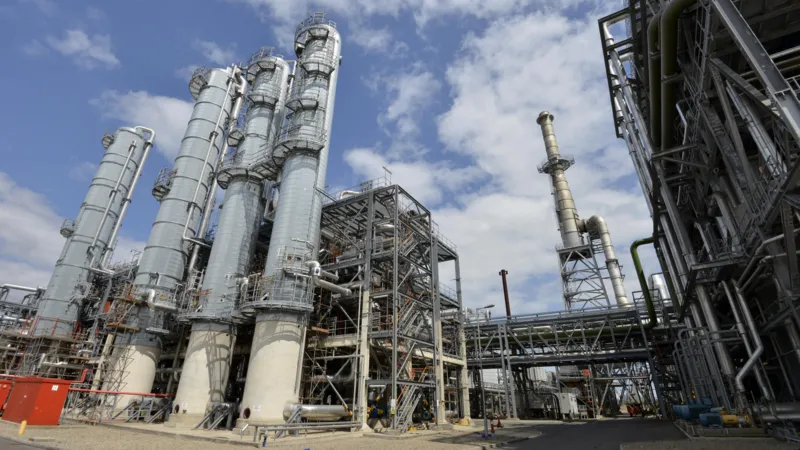


The future of the UK’s bioethanol production is under immediate threat following a controversial trade agreement with the United States. Ensus, the company behind the Redcar bioethanol facility, has issued a stark warning that the plant may be forced to shut down within days unless the government intervenes. The warning follows the removal of a 19% tariff on US ethanol imports — a decision that industry leaders say could dismantle the country’s domestic renewable fuel capabilities.


I. Fallout From the UK-US Ethanol Tariff Removal
1. Ensus Sounds the Alarm on Redcar Closure
Ensus chairman Grant Pearson has urged the UK government to take swift action, stating that the recent trade deal with the US has “fundamentally undermined” the company’s operations. By lifting the import tariff, the deal has opened the floodgates for cheaper US ethanol to pour into the UK market, placing British producers at a significant disadvantage. Pearson emphasized that without immediate support, the Redcar plant will be forced to cease operations imminently, putting over 100 direct jobs and thousands more in the supply chain at risk.

2. Threat to Skilled Jobs and Local Economy
The Redcar facility isn’t just a single employer — it is a crucial node in a broader regional economy. Ensus estimates that while the plant employs more than 100 people, it also supports around 3,000 jobs across northern England, including in agriculture, logistics, and energy. The facility sources grain from farms across the UK and Europe and supplies high-protein animal feed, a valuable byproduct, to the agricultural sector.
The potential closure could devastate these interconnected industries, creating a ripple effect far beyond the walls of the bioethanol plant itself. Pearson warned that the loss of the Redcar site would have a “catastrophic knock-on effect in other vital sectors of the economy.”

II. A Widening Crisis for Domestic Bioethanol
1. Vivergo Faces Similar Challenges
Ensus is not alone in its warning. Earlier this month, Associated British Foods (ABF), which operates the UK’s only other bioethanol plant — Vivergo Fuels at Saltend near Hull — issued a similar statement. The company described the trade deal as the “final blow” to its business, signaling that the consequences of this tariff decision are widespread and potentially irreversible for the UK’s bioethanol industry.
Like Ensus, ABF has called on the government for immediate assistance to prevent closures and job losses. The absence of a competitive domestic market for ethanol, now undercut by US imports, has placed both plants in untenable financial positions.
2. Environmental and Energy Security Setbacks
The two bioethanol plants are vital to the UK’s efforts to cut carbon emissions through the use of E10 fuel, a petrol blend containing up to 10% ethanol. Introduced in 2021, E10 is a cleaner-burning alternative to traditional fuels and represents a cornerstone of the UK’s low-carbon transportation policy.
Losing domestic production capacity would force the UK to rely more heavily on imported ethanol, which undermines the country’s environmental goals and increases its dependence on foreign energy. The shift could also hinder progress toward reducing emissions in line with the UK’s net-zero targets.
3. The US Perspective: Economic Boost, Global Expansion
While the UK grapples with the fallout, ethanol producers in the United States are celebrating the new agreement. According to the Renewable Fuels Association, the UK is already the second-largest destination for American ethanol exports. Association president Geoff Cooper welcomed the deal, citing its potential to support US farmers and offer cheaper, cleaner fuel alternatives to British consumers.
Similarly, US Commerce Secretary Howard Lutnick took to social media to express enthusiasm, stating he looked forward to the agreement “becoming simultaneously active in the coming days.” From the US standpoint, the trade deal marks a significant win for their agriculture and biofuel sectors.
III. Industry Urges Government to Step Up
1. An Urgent Call for Support
Industry leaders have consistently emphasized that they are not seeking permanent government subsidies. Rather, they are asking for urgent, short-term support to allow domestic producers time to adjust to the new market conditions and for regulatory changes to be considered.
Both Ensus and ABF have warned that without intervention, the damage to the sector could be irreversible. Their plea is not only about saving individual companies but also about protecting the broader green energy infrastructure the UK has worked to develop.
2. Government Response So Far
In response, a spokesperson for the Department for Business and Trade stated that the government is in active dialogue with the bioethanol sector to assess the impact of the new trade agreement. However, no concrete steps or proposals have been outlined publicly, leading to increasing anxiety among stakeholders.
The industry argues that time is of the essence. With both major bioethanol plants at risk, the UK’s ability to produce clean, domestically sourced fuel hangs by a thread.
Conclusion
The UK bioethanol industry is facing an existential crisis triggered by the removal of protective tariffs on US ethanol imports. As both Ensus and ABF struggle to remain operational, the government is being urged to act swiftly to prevent widespread job losses, protect local supply chains, and maintain progress toward environmental goals. While the US celebrates increased access to the UK market, British producers warn of economic damage and lost ground in the country’s green energy ambitions. Without immediate intervention, the UK could see the collapse of an industry that once stood as a key pillar of its renewable energy future.








