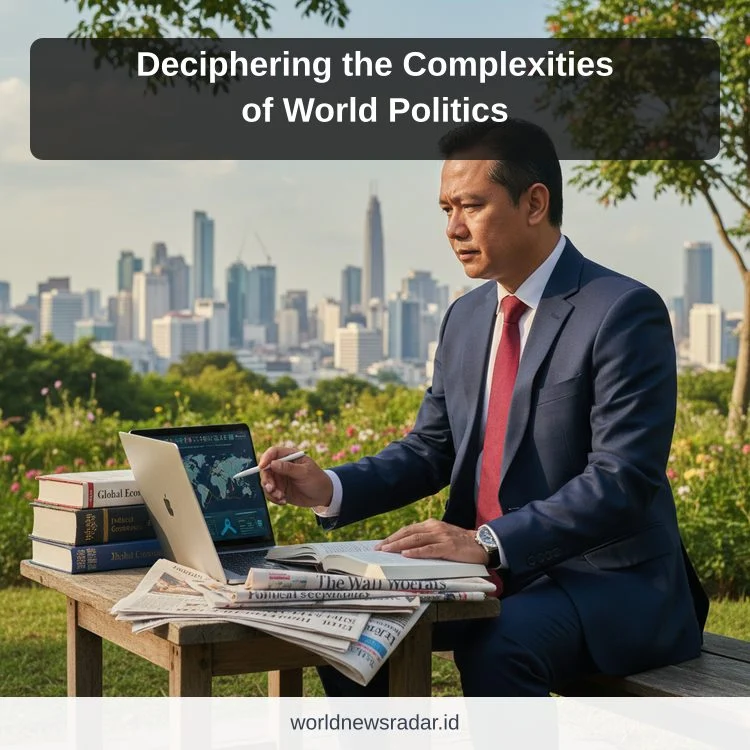
In an increasingly interconnected world, where every nation’s actions echo across continents, understanding the intricate web of global events is more crucial than ever. From geopolitical tensions in Eastern Europe to economic shifts in Asia, the landscape of world politics is in constant flux, presenting both formidable challenges and unprecedented opportunities. For those who seek to grasp the underlying forces shaping our collective future, merely skimming the headlines of a newspaper or a quick glance at daily news updates from sources like BBC News often falls far short. This article delves into the complexities that define current global affairs, unraveling the core drivers, examining the key players, and offering insights into how these dynamics influence everything from international relations to local economies. We will navigate through the labyrinthine corridors of diplomacy, conflict, and cooperation, providing a comprehensive framework for deciphering the geopolitical chessboard and understanding its profound implications.


The Shifting Sands of Geopolitics: Power Dynamics and Alliances
The global stage is a complex arena where power is constantly being reevaluated and alliances are perpetually in motion. Historically, the post-Cold War era saw a unipolar world dominated by the United States, but today, we are witnessing a clear shift towards a more multipolar order. Emerging powers like China and India are asserting their influence economically and militarily, challenging established norms and creating new centers of gravity. Consider the Belt and Road Initiative (BRI), China’s ambitious infrastructure project spanning numerous continents. While presented as an economic development plan, many analysts view it as a strategic move to extend China’s geopolitical reach, influencing trade routes and fostering dependency among participating nations. This initiative, with investments estimated in the trillions of dollars and involvement from over 140 countries, undeniably reshapes global economic and political landscapes. Similarly, the strengthening of regional blocs, such as the European Union’s ongoing efforts to integrate its foreign policy, or the increasing collaboration within ASEAN, demonstrates a move towards collective influence rather than singular dominance. These shifts lead to more intricate diplomatic negotiations, a greater likelihood of competing interests, and a need for nuanced understanding when following the world news.

Economic Interdependence and Geopolitical Leverage
The global economy is inextricably linked to political power, with economic interdependence often serving as both a stabilizing force and a powerful tool of coercion. Nations leverage their economic might to influence others, shaping policies and international relations. For instance, trade sanctions, import tariffs, and control over crucial resources, such as rare earth minerals or energy supplies, are frequently employed as instruments of foreign policy. The extensive EU sanctions against Russia following the invasion of Ukraine serve as a prime example, aiming to cripple the Russian economy and force a change in its geopolitical stance. These sanctions, which include freezing assets of key individuals and entities, blocking access to international financial markets, and banning specific exports and imports, have had significant repercussions not only for Russia but also for the global energy market and supply chains. Data from the World Bank indicates a projected contraction of the Russian economy by over 11% in 2022 due to these punitive measures. Similarly, China’s dominant position in the global supply chain for many essential goods provides it with considerable leverage in international negotiations. Understanding these economic underpinnings is vital for anyone following daily news, as they often explain the ‘why’ behind political decisions and international disputes. The intricate dance between economic advantage and geopolitical strategy dictates much of the global dialogue, impacting everything from resource allocation to humanitarian aid and international development. The dependence of many developing nations on foreign investment from major powers also creates a complex dynamic, where economic assistance can come with political strings attached, further entangling economic and political objectives on the world stage.
The Persistent Shadow of Conflict and Security Challenges
Despite efforts towards global cooperation, conflict remains a recurring feature of the international landscape, driven by various factors including territorial disputes, ethnic tensions, ideological clashes, and competition for resources. From conventional warfare to hybrid threats and cyber warfare, the nature of security challenges is constantly evolving. The lingering conflict in Yemen, for example, represents a devastating humanitarian crisis fueled by proxy rivalries between regional powers. Reports from the UN Human Rights Office indicate that over 377,000 people have died either directly or indirectly due to the conflict since 2014, making it one of the world’s worst humanitarian disasters. This conflict is not merely a localized affair; it draws in Saudi Arabia, Iran, and other international actors, each with their own strategic interests, demonstrating how regional instability can quickly escalate into a broader geopolitical concern. Furthermore, the rise of non-state actors, such as transnational terrorist organizations and private military contractors, adds another layer of complexity to security challenges, often blurring the lines between state and non-state aggression. Cyber warfare, targeting critical infrastructure and espionage, has become a silent but potent weapon, capable of disrupting economies and undermining national security without a single bullet being fired. Keeping track of these nuanced security threats requires constant attention to online news sources and expert analysis, as the traditional battlefield has expanded far beyond physical borders.
The Role of International Institutions and Global Governance
In an effort to manage global challenges and promote cooperation, a vast network of international institutions and governance frameworks has been established. Organizations like the United Nations (UN), the International Monetary Fund (IMF), and the World Trade Organization (WTO) play crucial roles in setting norms, mediating disputes, and providing platforms for multilateral dialogue. The UN, with its 193 member states, is the primary global body responsible for maintaining international peace and security, promoting sustainable development, and upholding human rights. Its Security Council decisions, though often subject to veto power by its permanent members, carry significant weight in international law. For example, UN peacekeeping missions have deployed millions of personnel over decades to conflict zones, aiming to stabilize regions and protect civilians, albeit with varying degrees of success. However, these institutions are not without their limitations; they often face challenges related to national sovereignty, funding constraints, and the difficulty of achieving consensus among diverse member states. Criticisms regarding their effectiveness, particularly in addressing major power conflicts or reforming outdated structures, are frequent. Understanding their mandates, their successes, and their failures is essential for comprehending the dynamics of world politics. Moreover, the increasing role of informal groupings such as the G7 and G20, which bring together leading economies to discuss global issues, highlights the evolving nature of global governance, where traditional institutions are complemented by more agile groupings addressing specific crises or economic shifts.
The Impact of Technology and Information on Political Landscapes
The rapid advancement of technology, particularly in communication and information dissemination, has profoundly reshaped the political landscape, impacting everything from social movements to international diplomacy. Social media platforms, while facilitating unprecedented connectivity, have also become fertile ground for the spread of misinformation, propaganda, and state-sponsored influence campaigns. This phenomenon of ‘disinformation warfare’ can manipulate public opinion, inflame tensions, and even sway electoral outcomes, posing a significant challenge to democratic processes worldwide. The 2016 US presidential election and the Brexit referendum are often cited examples where foreign actors allegedly leveraged social media to influence public discourse, highlighting the vulnerability of information ecosystems. Moreover, the proliferation of real-time online news from countless sources means that events unfold and are interpreted globally almost instantaneously, demanding rapid responses from governments and international bodies. This immediacy can lead to a more reactive political environment, where leaders are pressured to address situations before fully comprehending their complexities. Artificial intelligence (AI), beyond its transformative potential, also presents ethical and strategic dilemmas, including autonomous weapons systems and the potential for deepfakes to further distort reality. The debate around regulating these powerful technologies is itself a significant aspect of contemporary world politics, as nations grapple with their implications for national security, economic competitiveness, and individual liberties. The struggle to control narratives and ensure information integrity is a defining feature of the modern geopolitical arena.
Cultural and Ideological Fault Lines in Global Affairs
Beyond economic and military considerations, cultural and ideological differences often form profound fault lines that influence international relations and fuel conflicts. Divergent values regarding democracy, human rights, religious freedom, and societal norms can lead to misunderstandings, mistrust, and even direct confrontation between nations and blocs. The persistent ideological friction between democratic states and authoritarian regimes, for instance, informs numerous diplomatic standoffs and economic rivalries. Take the situation surrounding human rights in Xinjiang, China, where reports of large-scale detention of Uyghurs and other Muslim minorities have drawn widespread condemnation from Western governments and international human rights organizations. China, however, vehemently denies these allegations, framing its policies as necessary for counter-terrorism and economic development, reflecting a fundamentally different conception of state sovereignty and individual rights. This clash of narratives and values extends beyond specific incidents, shaping alliances, trade policies, and diplomatic engagements. Similarly, the rise of religious nationalism in various parts of the world, from India to the Middle East, demonstrates how deeply held cultural and religious identities can become powerful drivers of political action, often superseding economic logic or traditional geopolitical interests. Understanding these underlying cultural and ideological paradigms is critical for making sense of the complex motivations behind global events and for interpreting the nuanced commentary found in a discerning newspaper or detailed analysis from a reputable source like the BBC News. Ignoring these foundational differences risks misinterpreting the true nature of international disputes and the future trajectory of global relations.
The Emerging Challenge of Transnational Issues
The 21st century has brought to the forefront a new category of challenges that transcend national borders and require collective global action: transnational issues. Climate change, global pandemics, mass migration, and cybercrime are not problems that any single nation can effectively tackle alone. Climate change, with its far-reaching impacts on weather patterns, sea levels, and resource availability, necessitates unprecedented international cooperation. The Paris Agreement, an international treaty on climate change adopted by 196 parties, exemplifies an attempt to build a global framework, yet its implementation faces significant political and economic hurdles. Each country’s development goals and national interests often clash with the collective need for urgent action. Similarly, the COVID-19 pandemic starkly illustrated the interconnectedness of global health and the limitations of national responses without coordinated international efforts. The uneven distribution of vaccines, debates over intellectual property rights for treatments, and the disruption of global supply chains all became major political points of contention, highlighting the fragility of global health governance. Mass migration, often driven by conflict, poverty, or environmental degradation, poses complex humanitarian and political challenges for both origin and host countries, requiring intricate policy responses that balance national security with human rights. Cybercrime and online extremism similarly ignore national borders, demanding integrated security strategies and international law enforcement cooperation. These issues force nations to rethink traditional notions of sovereignty and security, pushing them towards greater interdependence and multilateral problem-solving, which is a constant theme in thoughtful world news coverage. The effectiveness of global governance in addressing these transnational issues will profoundly shape the future stability and prosperity of the planet.
Kesimpulan
Deciphering the complexities of world politics is an ongoing endeavor that requires a multifaceted approach, acknowledging the intricate interplay of power, economics, culture, technology, and transnational challenges. From grappling with shifting geopolitical landscapes and the leveraging of economic might to confronting persistent conflicts and managing transnational issues like climate change and pandemics, the global stage is in perpetual motion. A deep understanding demands that we move beyond superficial headlines and engage with the detailed analysis offered by reputable sources like a comprehensive newspaper or the in-depth reporting of BBC News. By doing so, we can better comprehend the motivations behind state actions, the dynamics of international relations, and the potential trajectories of global events. Stay informed, engage critically, and recognize that your awareness contributes to a more informed global citizenry capable of navigating and influencing the complex forces shaping our collective future. The future of our world hinges on our collective ability to understand and constructively engage with these intricate political realities.