





UK Prime Minister Keir Starmer has unveiled a bold new military aid package for Ukraine, marking a pivotal shift in how Western governments support Kyiv amid its ongoing war with Russia. For the first time, the UK will finance weapons for Ukraine using interest generated from frozen Russian assets. This strategic decision, announced just days before the NATO summit, underscores Britain’s deepening commitment to Ukraine’s security and reflects a broader Western effort to hold Moscow accountable for its aggression.


I. Redirecting Seized Russian Funds to Ukraine’s Defense
1. £70 Million in Interest to Fund Missile Supply
The UK has allocated £70 million in interest accrued from frozen Russian assets through its Extraordinary Revenue Acceleration (ERA) scheme. These funds will now be used to finance the delivery of 350 cutting-edge air defense missiles to Ukraine. The announcement marks a historic moment, as it’s the first time Britain has used Russia-linked funds directly to purchase and send arms to Kyiv.


2. Air Defense Missiles Adapted for Ground Launch
Originally engineered as air-to-air missiles, the ASRAAM systems have been transformed into ground-launched missiles by RAF technicians and defense contractor MBDA UK. These retrofitted weapons will be deployed using Raven platforms—mobile defense units developed in the UK. Five additional Raven units are currently en route to Ukraine, bringing the total to 13. The conversion process, remarkably completed in just three months, highlights the agility of Britain’s defense industry in responding to modern combat demands.

II. Strategic Objectives Behind the New Aid
1. Holding Russia Financially Accountable
Starmer emphasized the moral and strategic rationale behind the move. Speaking ahead of the NATO summit in The Hague, he stated, “Russia, not Ukraine, should pay the price for Putin’s barbaric and illegal war.” The decision to fund Ukraine’s defense through Russian assets sends a strong signal: the UK intends to ensure that Moscow bears a financial burden for its ongoing aggression.
2. Enhancing Ukraine’s Security as a Shared Interest
Starmer further declared that Ukraine’s safety is intrinsically linked to the UK’s national security. By helping Kyiv bolster its air defenses, the UK is not only supporting an ally but also strengthening European stability against external threats.

3. Reinforcing NATO Solidarity and Defense Spending
The announcement also aligns with the UK’s agenda at the upcoming NATO summit. British officials are expected to advocate for increased defense investments among allies and highlight the importance of collective action in deterring aggression—not just from Russia but also in conflict-prone regions like the Middle East.
III. Expanding the UK’s Commitment to Ukraine
1. Record-Breaking Annual Support Package
This latest initiative is part of Britain’s most significant annual military aid commitment to Ukraine, totaling £4.5 billion. Earlier this year, the UK struck a £1.6 billion deal to supply more than 5,000 air defense missiles and allocated an additional £350 million to rapidly expand drone operations.
2. Proof of Adaptability in Modern Warfare
UK Defense Secretary John Healey emphasized the adaptability of Britain’s military-industrial base in meeting the evolving demands of war. He noted that the retrofitted ASRAAMs are not only effective but will also help save lives by protecting Ukrainian cities and infrastructure from ongoing Russian missile attacks. Healey also made clear that Moscow remains uninterested in genuine peace talks, further justifying the need for continued military support.
IV. Strengthening Military Ties Between the UK and Ukraine
1. Bilateral Defense Cooperation Agreement
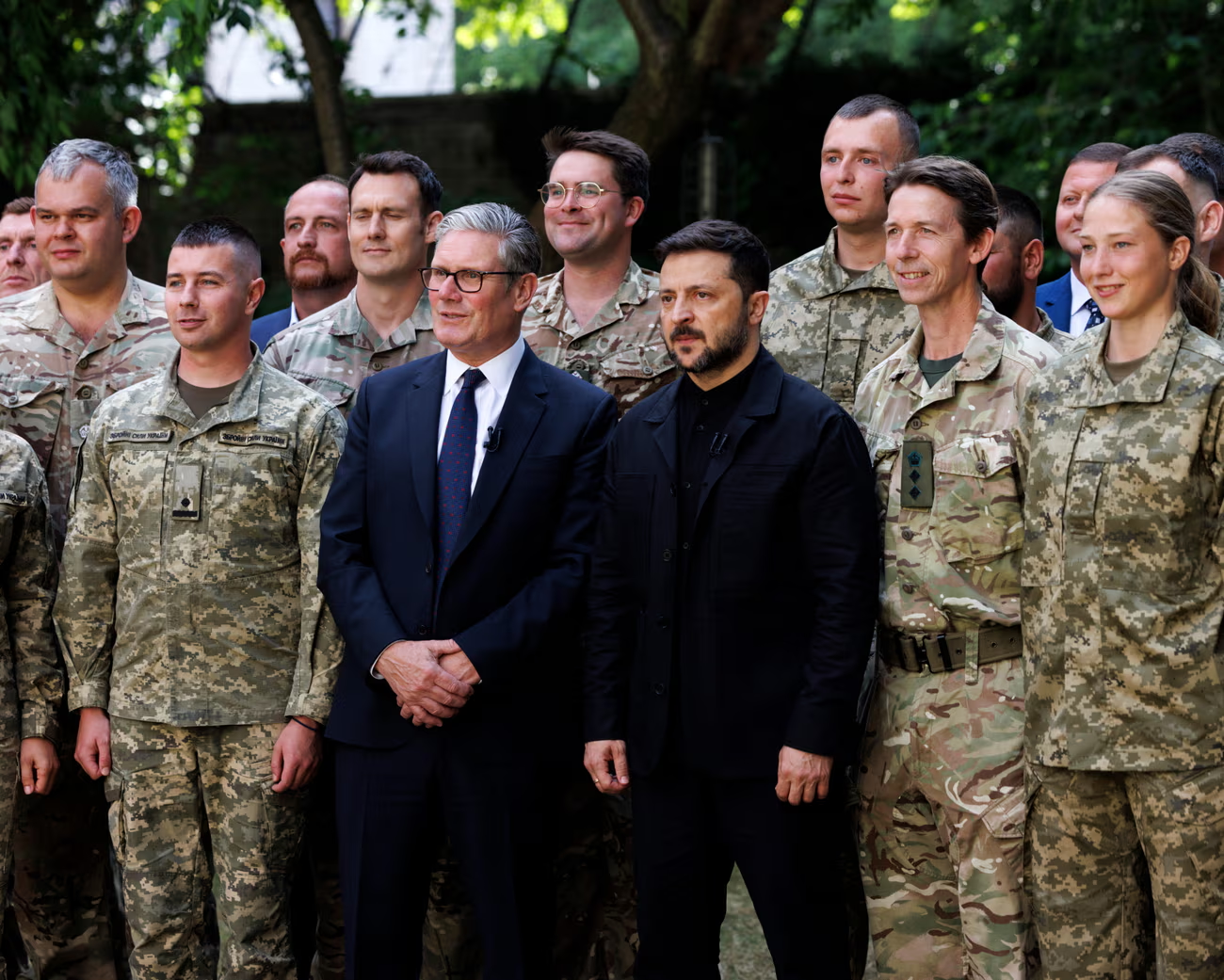
In a meeting at 10 Downing Street earlier this week, Starmer and Ukrainian President Volodymyr Zelenskyy announced a new bilateral defense cooperation agreement. The pact aims to deepen joint military production and technological collaboration between the two nations. It also reaffirms the UK’s long-term commitment to Ukraine’s sovereignty and its defense modernization efforts.
2. Symbolic Unity Among Allied Forces
The announcement was made in front of British, Ukrainian, and allied soldiers, symbolizing a unified military front. Though Zelenskyy has been invited to the NATO summit, he is not expected to participate in the core discussions, which will largely center on increasing defense budgets and readiness among member states.
V. A Broader Global Security Context
1. Linking Europe’s Defense to Middle East Escalation
While Ukraine remains a key focus, UK officials plan to use the NATO platform to address rising tensions in the Middle East. Discussions will include how member states can remain responsive to conflicts outside Europe, ensuring that NATO remains a flexible and globally relevant force.
2. The Precedent of Using Frozen Assets
The UK’s decision to use interest from Russian-held funds could set a significant precedent for other nations. As countries continue to explore ways to support Ukraine without burdening domestic taxpayers, tapping into Russia’s frozen wealth may become a more widely accepted strategy.
Conclusion
Britain’s latest aid package to Ukraine, funded by frozen Russian assets, marks a turning point in how the West supports Kyiv’s resistance against Moscow. By creatively utilizing financial tools alongside military innovation, the UK is demonstrating both resolve and resourcefulness. As NATO allies prepare to meet in The Hague, the message is clear: supporting Ukraine remains not only a moral imperative but a strategic necessity. This landmark move may well inspire similar actions from other nations, further isolating Russia on both the battlefield and the balance sheet.








