





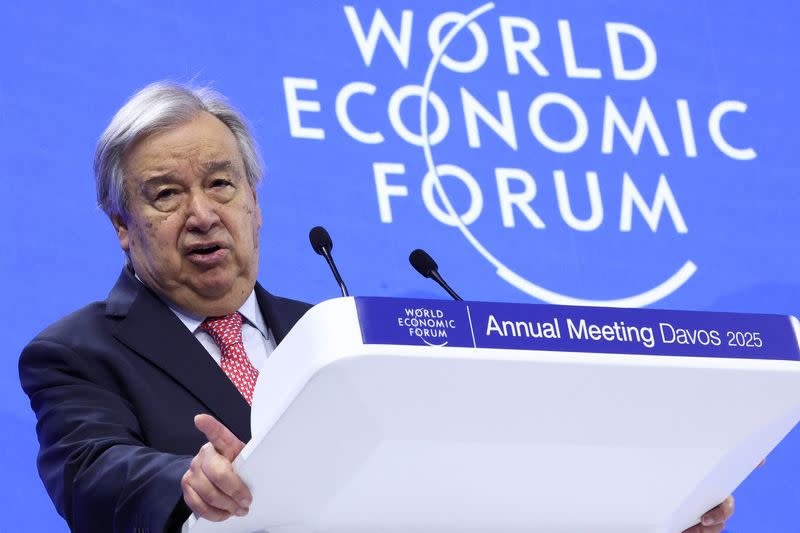
As the United Nations commemorates the 80th anniversary of its founding charter, Secretary-General António Guterres issued a stark warning on Thursday, stating that the organization’s guiding document is under unprecedented strain. Addressing the 193-member assembly, Guterres emphasized that the UN Charter should not be selectively applied or ignored when inconvenient, declaring it the cornerstone of international law and diplomacy. Amid ongoing global conflicts and rising geopolitical tensions, the call served as both a reflection and a plea to return to foundational values.

I. The Charter’s Enduring Purpose
1. A Founding Vision Born from War
The United Nations Charter was signed on June 26, 1945, in San Francisco by 50 founding nations, emerging in the wake of World War II. Four months later, it officially came into effect, establishing the UN as a body committed to preventing future conflicts, upholding human dignity, and ensuring equal rights for all people and nations, regardless of size or power. The document represents a collective aspiration to create a more just and peaceful world.


2. The Charter as a Binding Framework
Guterres underscored that the Charter is not optional or to be interpreted at will. He criticized a growing tendency among states to treat it as a flexible guideline, stating, “It is not an a la carte menu. It is the bedrock of international relations.” The Secretary-General’s remarks highlighted the urgent need to reaffirm the Charter’s authority and role in guiding global conduct.
II. Contemporary Violations and Selective Adherence
1. Russia and Israel in the Spotlight
Recent years have seen significant breaches of the Charter go largely unchecked. The General Assembly has condemned Russia’s military actions in Ukraine and Israel’s offensive in Gaza as violations of international law. Yet, despite widespread criticism, both conflicts persist, raising questions about the UN’s ability to enforce its own principles. These situations exemplify the widening gap between the Charter’s ideals and the geopolitical reality.
2. Iran and the United States: A War of Interpretations
Last week, Iran accused the United States of breaching the UN Charter through airstrikes targeting its nuclear facilities. The U.S., in response, defended its actions as legitimate acts of self-defense, also citing the Charter as legal justification. This case illustrates how opposing nations use the same foundational text to legitimize conflicting behaviors, further muddying the waters around the Charter’s authority.

III. Reflections on the UN’s Legacy and Limitations
1. A Record of Achievement Amid Challenges
Over the past eight decades, the United Nations has played a significant role in global development, peacekeeping, and humanitarian relief. From mediating disputes to leading vaccination campaigns, the UN has been instrumental in advancing international cooperation. However, these successes often sit uncomfortably alongside persistent global crises and unresolved conflicts that the UN has been unable to halt or resolve.
2. Diplomatic Critique of the UN’s Effectiveness
U.S. diplomat McCoy Pitt acknowledged the UN’s contributions but cautioned against romanticizing its legacy. Speaking candidly, Pitt said, “We regret that the UN has lost sight of its founding mission.” He noted the ongoing presence of war across multiple continents as evidence that the Charter’s principles are not being fully realized. He called for a renewed commitment to the Charter—not only as a symbolic ideal but as an actionable framework.
3. Inaction and Impunity
One of the most persistent criticisms of the United Nations is its inability to hold powerful nations accountable for violations. Despite the Charter’s clear mandates, enforcement mechanisms remain weak or obstructed by political dynamics within bodies like the Security Council. As a result, many breaches go unpunished, fostering a culture of impunity that undermines the Charter’s credibility.
IV. A Call to Recenter the UN Charter
1. Guterres’s Appeal for Collective Responsibility
Guterres’s message was not just a warning but a call to action. He urged member states to recommit to the foundational values of the UN Charter, stressing that its relevance depends on collective adherence. “The Charter must remain the foundation of how we interact with one another,” he said, challenging nations to align their policies with the spirit, not just the letter, of international law.
2. Navigating a Fractured World Order
The current global landscape is marked by fragmentation, competition, and growing disregard for multilateralism. With new alliances, regional conflicts, and shifting power balances, the international community faces a complex environment where the Charter is often sidelined. Guterres warned that continued erosion of these principles could lead to greater instability and a breakdown of global norms.
3. Reinvigorating Multilateral Institutions
To restore the authority of the Charter, experts argue for a reform of multilateral systems. This includes revisiting the composition and veto powers within the UN Security Council, improving accountability mechanisms, and strengthening the role of international courts. Such changes, while politically difficult, may be essential to ensure the UN remains effective and relevant in addressing 21st-century challenges.
Conclusion
As the United Nations marks 80 years since the signing of its Charter, the foundational document finds itself under increasing strain. Secretary-General António Guterres’s remarks serve as a sobering reminder of the gap between the Charter’s noble ideals and the complex geopolitical reality of today. While the UN has achieved much, its credibility hinges on the consistent application of its core principles. Without a renewed global commitment to the Charter, the world risks sliding further into disorder and conflict. The anniversary should not only be a moment of commemoration but also a turning point toward recommitting to the values that once united a world emerging from war.








